
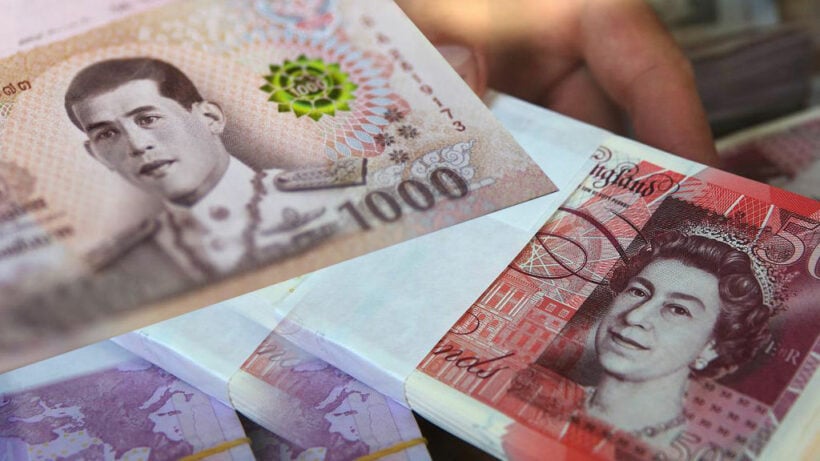
If “pound to baht” is on your mind, you’re probably planning a Thai getaway, sending money to family, or pricing imports. Whatever your goal, converting British pounds (GBP) to Thai baht (THB) is simple in theory and surprisingly tricky in practice. This guide breaks down how the exchange works, the true cost you’ll pay, where to get the best rates, and smart tactics that travelers and remitters use to stretch every pound.
GBP → THB in Plain English: The Rate You See vs. The Rate You Get
Every currency pair has a mid-market rate, the midpoint between buy and sell prices that banks quote each other. That’s the “real” rate you’ll see on financial news tickers and currency converters. Consumers rarely get that exact number. Instead, banks and bureaus add a small markup (a spread) or charge fees on top. Your out-the-door conversion price is therefore:
Your Effective Rate = Mid-Market Rate − (Spread + Fees in THB/GBP terms)
Two providers may advertise “zero fees,” yet bake a bigger spread into the rate. Others show a near-perfect mid-market rate but add a fixed fee. Always compare final baht received for the same pound amount; that’s what matters.
Where to Convert: The Best (and Worst) Places to Swap Pounds for Baht
1) UK high-street banks: Convenient for pre-trip cash, but they often include wider spreads and sometimes order-ahead delays. Good for a starter stash (฿3,000–฿5,000) to cover airport taxis and snacks.
2) Specialist online exchangers & multi-currency apps: These frequently track close to the mid-market rate and disclose fees clearly. They’re strong for bank-to-bank transfers to Thailand and for travel cards you can preload in GBP and convert to THB inside the app.
3) Airport kiosks (UK and Thailand): Almost always the worst rates, optimized for convenience when you’re tired and desperate. If you must, exchange the absolute minimum (think ฿1,000–฿2,000) and do the rest in town.
4) Thai exchange counters (Bangkok, Chiang Mai, Phuket): In tourist areas, reputable counters can be surprisingly competitive—often beating UK high-street rates. Bring your passport, and compare at least two counters before committing.
5) ATMs in Thailand: ATMs give bank network rates plus your home bank’s international fee. The classic trap is DCC (Dynamic Currency Conversion)—the ATM asks, “Charge in GBP instead of THB?” Always choose THB to avoid a brutal instant markup.
Fees, Spreads, and the DCC Trap: How to Avoid Silent Markups
-
Fixed fee: A flat charge (e.g., £3.00 per withdrawal/transfer). Harmless on big amounts, painful on small ones.
-
Percentage fee: A cut of the transfer (e.g., 0.5%–3%). Scales with your amount.
-
Spread/markup: Hidden in the rate (e.g., quoting 1 GBP = 44.40 when mid-market is 45.10). Harder to notice unless you compare.
-
DCC (Dynamic Currency Conversion): A “convenience” that lets the merchant/ATM convert to GBP on the spot at a poor rate. Always decline DCC and pay/withdraw in THB.
Pro move: Do a quick two-step check before you convert:
-
Look up the live mid-market rate on a reputable, real-time source.
-
Get the provider’s final quote including fees.
If your net rate trails the mid-market by more than ~1–1.5% for large amounts or ~2–3% for small, shop around.
Timing the Transfer: What Moves the Pound–Baht Pair?
Currency rates breathe with news and policy. These are the usual suspects behind sudden GBP/THB swings:
-
Central banks: The Bank of England (BoE) and Bank of Thailand (BoT) set policy rates. A surprise hike strengthens that currency; a cut does the opposite (all else equal).
-
Inflation prints & GDP: Hot inflation in the UK might push the BoE hawkish (supporting GBP), while weak growth can weigh on it.
-
Risk appetite & tourism flows: Thailand’s baht can strengthen during tourism booms or when global investors chase emerging-market yield; it may soften during risk-off episodes.
-
Trade and current account: Thailand’s exports (electronics, autos, agriculture) and energy costs influence THB; UK trade dynamics influence GBP.
You don’t need to be a day-trader, but if you’re moving large sums (e.g., a tuition payment or property deposit), consider watching the rate for a week or two. Many apps let you set rate alerts or even auto-convert when a target rate hits.
How Much Cash Do You Need in Thailand? A Quick Budget Reality Check
Thailand ranges from budget-friendly to luxe. Rough daily estimates (per person):
-
Shoestring: ฿1,000–฿1,800 (street food, hostel/guesthouse, local transport)
-
Comfortable mid-range: ฿2,500–฿4,500 (nice hotel, cafés, a few paid attractions)
-
Upscale: ฿5,000+ (resorts, fine dining, island hopping, private tours)
Cards are more widely accepted than a decade ago, yet cash is still king in markets, taxis, and rural areas. Arrive with a small starter amount of THB, then top up via a good local exchanger or ATM (decline DCC).
Practical Conversion Math (With a Clear Example)
Let’s say the illustrative mid-market rate is 1 GBP = 45.00 THB (example only; check live data on the day).
-
You convert £300 at a counter quoting 44.10 THB per GBP, no fee.
-
You receive £300 × 44.10 = ฿13,230.
-
-
Another provider offers 44.80 THB with a £3 fee.
-
Baht before fee equivalently: £300 × 44.80 = ฿13,440. The £3 fee matters only in GBP, but your net baht still beats the first option because the rate is better.
-
-
If a multi-currency app gives 44.95 THB with 0.5% fee:
-
Raw baht: £300 × 44.95 = ฿13,485.
-
0.5% of £300 = £1.50. In baht terms at ~44.95, that’s roughly ฿67 equivalent cost. Your effective baht is still usually higher than poorer-rate, “no-fee” options.
-
Bottom line: Compare net baht for the same pound amount and ignore “no fee” marketing if the exchange rate is weak.
Traveler Tactics to Maximise Your Pound
-
Mix methods: Bring a little cash from the UK, use Thai exchangers for bulk, and keep a fee-light card for emergencies.
-
Decline DCC everywhere: ATM, shops, hotels. Always be charged in THB.
-
Withdraw fewer, larger amounts: One £3 fixed fee hurts less on ฿10,000 than on ฿1,000.
-
Use rate alerts: Convert when your target rate triggers.
-
Keep ID handy: Thai counters often request a passport for larger exchanges.
-
Avoid airports for big swaps: City rates are almost always better.
-
Mind card surcharges: Some Thai merchants add 2–3% for card payments. Cash can be cheaper.
Sending Money to Thailand (Not Traveling)?
For remittances (rent, tuition, family support), compare:
-
Bank wire vs. online remitter: Banks are simple but can be expensive; online platforms often publish transparent fees and mid-market-plus-tiny-markup pricing.
-
Transfer speed: Standard (1–3 business days) vs. instant options for a fee.
-
Receiving method: THB bank account deposit vs. cash pickup. Pickup is faster but sometimes pricier.
Compliance note: Expect identity checks for AML/KYC rules, especially on larger transfers.
Safety, Documentation, and Common-Sense Tips
-
Receipts: Keep exchange receipts for your records and in case you need to exchange leftover baht back to pounds.
-
Serial numbers: Some exchangers stamp bills; that’s normal.
-
Counterfeit awareness: Use reputable counters; inspect notes (Thai baht has distinct security features and textures).
-
Leftover baht: Spend at the airport on departure or change back in town for a better rate than the departure gate counters.
Quick Recap You Can Screenshot
-
Know the mid-market rate and compare final baht in hand.
-
Avoid DCC; always choose to be charged in THB.
-
Airport = last resort; city counters or smart apps are better.
-
For big amounts, watch BoE/BoT signals and set rate alerts.
-
Remittances: Compare bank wires vs. online remitters for speed and cost.
Related: Tiny Triumphs & Big Feelings: A Heart-Full Guide to “My First Years”
Whether you’re bargaining for pad thai in Bangkok or wiring rent to Chiang Mai, understanding the mechanics—mid-market vs. effective rate, spreads, and fees—turns “pound to baht” from a hazy guess into a confident decision. Spend a minute comparing providers, and you’ll keep more baht in your pocket for the experiences that matter.