
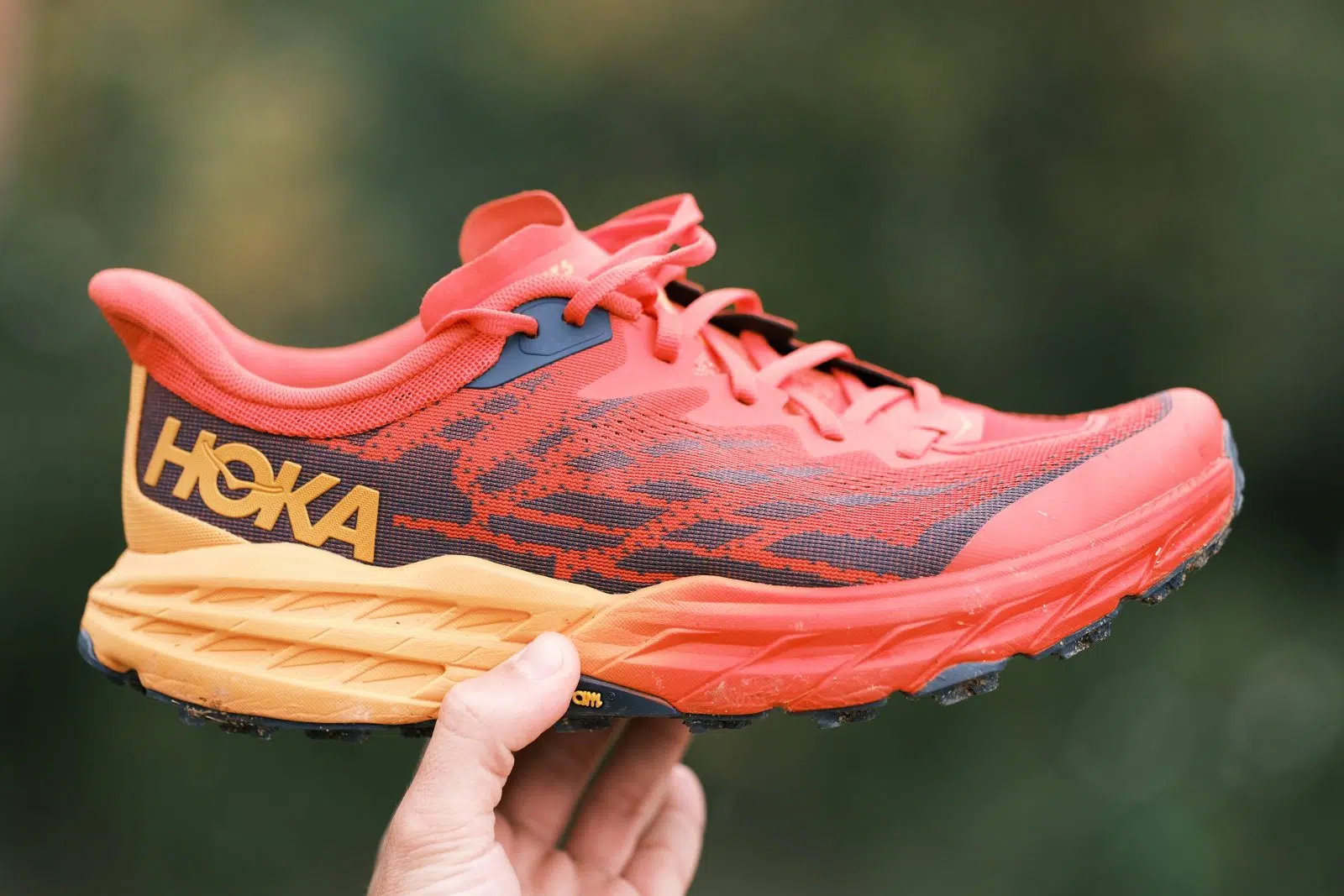
The Hoka Speedgoat series has always carried a sort of mythical status in the trail-running world. When the fifth version arrived, it didn’t just update the line, it pushed it further into “gold-standard” territory. Even as newer models like the Speedgoat 6 appear on shelves, the Speedgoat 5 remains one of the most talked-about, reviewed, and purchased trail shoes because it hits a rare balance: soft enough for long miles, tough enough for rugged terrain, and light enough to feel lively underfoot. If you’re searching for a pair that can handle rocky climbs, sloppy mud, dusty singletrack, and even the occasional road connector, this shoe is still one of the safest bets.
In this deep-dive, we’ll break down its fit, traction, cushioning, durability, and how it stacks against alternatives, everything a buyer genuinely wants to know before spending their money.
A Quick Look at the Specs
Before getting poetic about trail performance, here’s the essential tech sheet:
-
Weight: ~9.8 oz (men) / ~8.5 oz (women)
-
Stack height: 31mm heel / 27mm forefoot
-
Drop: 4 mm
-
Outsole: Vibram Megagrip with Traction Lugs
-
Midsole foam: CMEVA
-
Lug depth: 5 mm
-
Fit options: Regular, Wide, and GTX (waterproof)
These numbers already hint at the shoe’s identity: a moderately soft, high-stack, grippy tank that still feels surprisingly nimble.
What Changed From the Speedgoat 4?
The Speedgoat 5 looks similar to the 4 if you glance quickly—but once you run in it, the differences are obvious.
Hoka shaved weight, reworked the mesh upper, refined the heel hold, and updated the outsole pattern. The foam also feels slightly more responsive. While the Speedgoat 4 had a reputation for being durable but a little bulky, the 5 feels airier, smoother, and more fun—almost like Hoka took the DNA of the Mafate line and blended it with a classic long-distance cruiser.
The result? One of the most versatile trail shoes Hoka has ever released.
Fit, Upper & Comfort: Snug Where It Needs to Be
If you’ve worn previous Speedgoats, especially the 3 or 4, you’ll notice the 5 has a more forgiving feel in the upper. It’s not loose, but it isn’t as stiff. The jacquard mesh breathes extremely well in hot weather yet has enough structure to hold your foot securely on rocky off-camber trails.
-
Toe box: Medium, not Altra-wide but not cramped
-
Midfoot: Secure wrap with excellent lockdown
-
Heel hold: Improved, reduced slippage on steep climbs
-
Breathability: Strong—great for summer and dry climates
The shoe works for narrow, average, and even slightly wide feet, especially with the wide option available. Comfort on long days is a standout quality—nothing pinches, rubs, or rubs awkwardly after 20 km or more.
Cushioning & Ride: Soft, Smooth, and Surprisingly Stable
The Speedgoat 5’s midsole is classic Hoka—protective and bouncy enough to stay comfortable for hours, but not mushy. The 4 mm drop helps with natural foot positioning, and the early-stage Meta-Rocker makes climbing and descending feel efficient.
What stands out most is how the shoe balances cushioning with control. Even with a high stack, it never feels wobbly. On technical terrain, the platform keeps you stable without killing ground feel entirely.
In short: it’s cushioned enough for ultras, stable enough for mountains, and efficient enough for daily trail mileage.
Traction & Stability: This Is Where the Speedgoat 5 Shines
Hoka partnered with Vibram for a redesigned outsole using Megagrip rubber—widely regarded as one of the best compounds for trail traction. The Traction Lugs use a micro-textured shape that digs into loose dirt far better than the Speedgoat 4.
Performance across surfaces:
-
Dry rock: Excellent. Very sticky.
-
Wet rock: Good—better than many shoes in its class.
-
Mud: Decent, but deep mud can clog the 5mm lugs.
-
Loose gravel: Very stable thanks to the midsole geometry.
-
Downhill bombing: Predictable with great braking traction.
If you run a lot of technical, rocky, rooty trails, this shoe feels like cheating. It grips when it shouldn’t. The only situation where it loses points is clay-heavy mud or wet grass—conditions that punish almost every trail shoe.
Durability: Built for Real Mileage
Most reviewers and long-distance runners report 400–600 km of strong performance before the foam begins to lose its bounce. The outsole is extremely durable for a shoe that isn’t marketed as a mountain tank. The upper resists tearing far better than expected given how breathable it is.
You won’t get Mafate-level durability, but you absolutely get your money’s worth.
Who the Hoka Speedgoat 5 Is Perfect For
Because of its balanced nature, the Speedgoat 5 suits a very broad range of runners:
Trail runners who want a “do-everything” shoe
From weekend singletrack to 100 km races, it handles nearly every surface.
Ultra-distance athletes
The cushioning + stability combination makes it a reliable race option.
Hikers and fastpackers
Surprisingly great for long hikes thanks to cushioning and grip.
oad-to-trail runners
It’s smooth enough on tarmac and fire roads without feeling awkward.
Who Should NOT Buy It
No shoe fits everyone, and the Speedgoat 5 is no exception.
Mud specialists
If your trails are swampy or clay-heavy, a more aggressive shoe (e.g., Salomon Speedcross) will grip better.
Runners who want a wide, splay-friendly toe box
Altra Olympus or Topo Athletic shoes might be a better fit.
Racers craving carbon-plate speed
The Speedgoat 5 is lively but not a carbon rocket like the Hoka Tecton X.
Speedgoat 5 vs. Speedgoat 6: Should You Upgrade or Save Money?
With the Speedgoat 6 appearing in 2024–2025, some runners wonder whether to chase the latest model. The truth? The Speedgoat 5 remains a fantastic purchase and often offers better value.
-
Speedgoat 5: Softer, more forgiving, often cheaper
-
Speedgoat 6: Firmer, more responsive, slightly improved upper
If you prefer plush cushioning, stick with the SG5. If you want a little more “pop,” the SG6 could be worth the upgrade.
Speedgoat 5 vs. Mafate Speed 4
Another comparison buyers frequently make:
| Feature | Speedgoat 5 | Mafate Speed 4 |
|---|---|---|
| Cushioning | Softer | Firmer & denser |
| Weight | Lighter | Slightly heavier |
| Grip | Excellent | Outstanding |
| Best use | All trailing | Technical mountains |
If your trails are extremely rugged or you prioritize rock protection above all, the Mafate is king. For 99% of runners, though, the Speedgoat 5 is more versatile.
Related: Complete Guide to The Great British Sewing Bee 2025 (GBSB 2025)
Conclusion
The Hoka Speedgoat 5 doesn’t just live up to its reputation, it exceeds it. It’s the type of shoe you can buy without overthinking because it works for almost everyone on almost every trail. Lightweight, grippy, protective, and long-running comfortable, it’s a true workhorse that feels fun and confidence-boosting underfoot.
Whether you’re tackling your first trail marathon, grinding through long mountain climbs, or just looking for a comfortable everyday trail runner, the Speedgoat 5 is easily one of the top choices in 2025—and likely will be for years to come.