
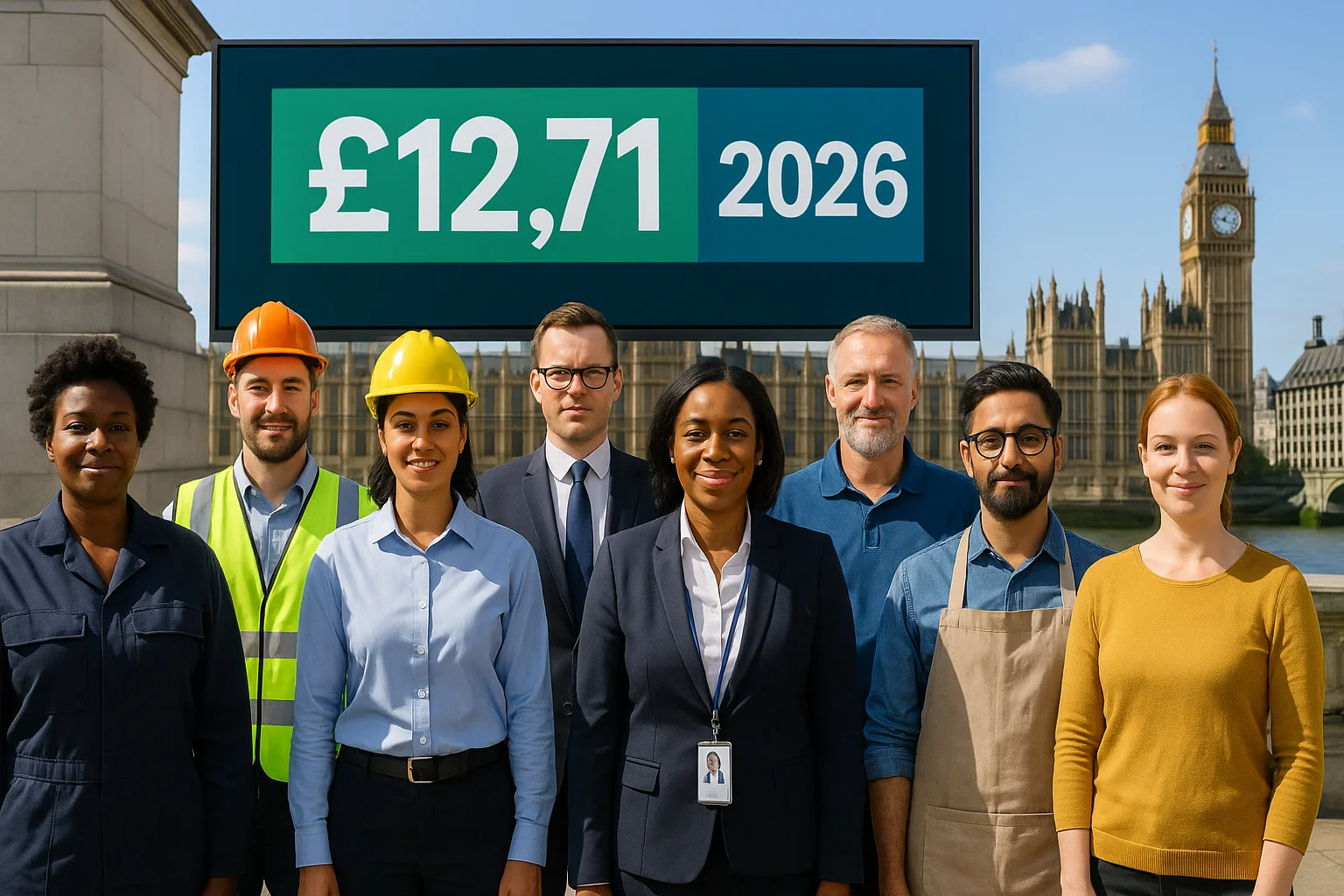
Every year, changes to the UK’s National Living Wage spark widespread attention—from households budgeting month to month to businesses planning payroll costs well in advance. As 2026 approaches, interest in the UK national living wage 2026 estimate is growing, driven by inflation pressures, labour shortages, and evolving government policy on fair pay.
While the official rate has not yet been announced, economic indicators and past trends give us a fairly reliable picture of where wages may be heading—and what that could mean in practical terms.
What the National Living Wage Represents
The National Living Wage (NLW) is the legally mandated minimum hourly pay for workers aged 21 and over in the UK. It differs from the “real living wage,” which is independently calculated based on living costs.
The government’s stated ambition has been to align the NLW with a percentage of median earnings, rather than treating it as a fixed social benefit. This approach has gradually pushed pay rates upward over recent years.
Recent Trends That Shape the 2026 Outlook
To estimate future changes, it helps to look at what’s already happened:
-
The NLW has risen consistently year on year
-
Increases have often outpaced inflation during tight labour markets
-
The Low Pay Commission factors in employment impact as well as living costs
-
Political pressure to support low-income workers remains strong
In recent years, rises of 6–10% have not been uncommon, particularly during periods of high inflation or economic recovery.
The Likely Range for 2026
Based on wage growth forecasts, inflation projections, and government policy signals, many analysts expect the 2026 rate to fall somewhere between £12.00 and £12.60 per hour.
This estimate assumes:
-
Continued commitment to raising pay floors
-
Moderate inflation compared to recent peaks
-
Cautious adjustments to avoid job losses
While no figure is guaranteed, the direction of travel suggests another meaningful increase rather than a freeze or marginal uplift.
How This Compares to Previous Years
Looking at recent progression helps illustrate the scale of change:
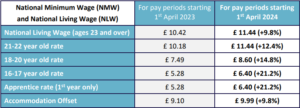
| Year | National Living Wage (£/hour) | Approx. Annual Increase |
|---|---|---|
| 2023 | £10.42 | Significant post-inflation rise |
| 2024 | £11.44 | Strong uplift |
| 2025 | £11.44–£11.80 (estimated range) | Moderate growth |
| 2026 | £12.00–£12.60 (estimated) | Continued upward trend |
This trajectory shows a clear policy direction toward higher minimum earnings, even as economic conditions fluctuate.
What This Could Mean for Workers
For millions of workers, even a modest hourly increase can have a tangible impact. At full-time hours, moving from £11.50 to £12.50 per hour translates into thousands of pounds annually before tax.
In real terms, this can help with:
-
Rising rent and mortgage costs
-
Energy and food bills
-
Transport expenses
-
Reducing reliance on in-work benefits
I remember speaking with a retail worker who said a previous wage rise didn’t feel dramatic hourly—but over the year, it finally allowed them to build a small emergency fund for the first time.
The Employer Perspective
For employers, particularly small and medium-sized businesses, higher wage floors come with mixed implications.
On one hand:
-
Higher pay can reduce staff turnover
-
Recruitment becomes easier
-
Productivity and morale often improve
On the other:
-
Payroll costs increase immediately
-
Profit margins may tighten
-
Prices may need adjustment
Sectors such as hospitality, social care, and retail are especially sensitive, as labour costs make up a large share of operating expenses.
A Practical Business Scenario
Imagine a café employing ten staff members, each working 35 hours a week. A £1.00 hourly increase adds over £18,000 annually to wage costs before employer contributions.
Some businesses respond by:
-
Slightly raising prices
-
Investing in staff training to improve efficiency
-
Adjusting opening hours
-
Absorbing costs in exchange for better retention
How businesses adapt often determines whether wage rises feel like a burden or a long-term investment.
Wider Economic Effects
National Living Wage increases ripple through the economy. Higher earnings can boost consumer spending, which supports local businesses. However, if increases outpace productivity, inflationary pressures can re-emerge.
Policymakers aim to strike a balance—supporting low-paid workers without destabilizing employment levels. This balancing act is likely to shape the final 2026 figure.
Common Misunderstandings
One frequent misconception is that the National Living Wage automatically reflects the true cost of living. In reality, it is a political and economic compromise.
Another misunderstanding is that all workers benefit equally. Age thresholds, apprenticeships, and different minimum wage bands mean not everyone receives the same rate.
Preparing for the Change
Whether you’re an employee or an employer, preparation matters:
-
Workers can plan savings and budgeting more confidently
-
Employers can forecast payroll and pricing early
-
HR teams can adjust contracts and systems in advance
Early awareness often reduces the shock of implementation.
Conclusion
The UK national living wage 2026 estimate points toward another step upward in minimum pay, likely landing around the £12 mark or slightly above. While the exact figure remains unconfirmed, the broader trend is clear: minimum earnings are continuing to rise as policymakers respond to cost-of-living pressures and labour market realities.
For workers, this offers incremental financial relief. For employers, it presents both challenges and opportunities. Understanding the likely direction now allows everyone to plan smarter, rather than reacting later.
Frequently Asked Questions
When will the 2026 National Living Wage be officially announced?
Usually in the autumn prior to implementation, following recommendations from the Low Pay Commission.
Does the National Living Wage apply to all workers?
It applies to workers aged 21 and over; younger workers fall under different minimum wage bands.
Is the 2026 rate guaranteed to increase?
While not guaranteed, historical trends strongly suggest an increase.
How does this differ from the Real Living Wage?
The Real Living Wage is independently calculated based on living costs and is not legally binding.
Can businesses delay implementation?
No. Once set, the National Living Wage is a legal requirement.