
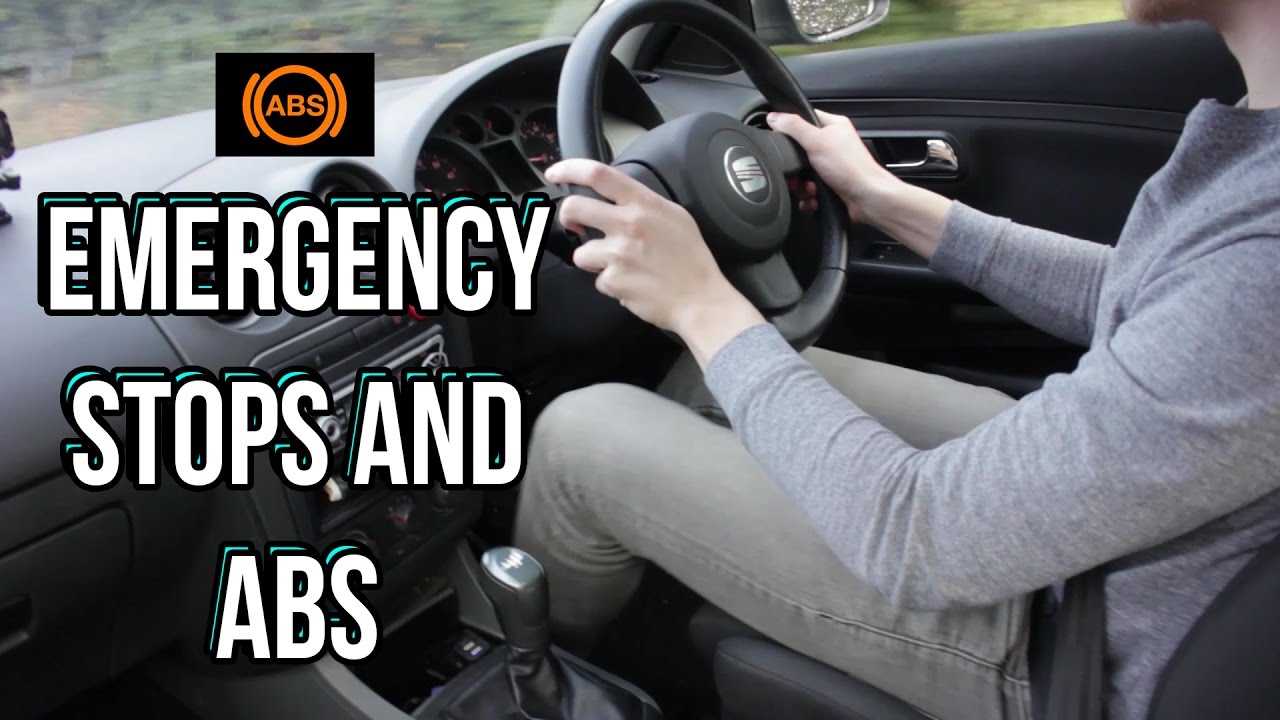
In a true emergency on the road, there’s rarely time to think—your body reacts before your brain catches up. That’s why understanding how should you use anti-lock brakes when you need to stop in an emergency is not just a theory question from a driving test; it’s a real-life skill that can prevent serious accidents.
Anti-lock braking systems (ABS) are designed to help drivers maintain control during hard braking, but they only work properly if used the right way. Misusing ABS—often by instinct—can actually increase stopping distance or reduce steering control at the worst possible moment.
What anti-lock brakes are designed to do
Anti-lock brakes prevent your wheels from locking up when you brake suddenly. Instead of skidding uncontrollably, the system rapidly pumps the brakes many times per second. This allows your tires to keep traction with the road while slowing down.
The key benefit of ABS is steering control. Even during full emergency braking, you can still steer around obstacles—something that isn’t possible with locked wheels.
The correct way to use ABS in an emergency stop
When you need to stop suddenly and your vehicle has anti-lock brakes, the correct technique is surprisingly simple:
Press the brake pedal firmly and continuously, and do not pump it.
This is where many drivers make mistakes. Older driving habits taught people to pump the brakes to prevent skidding. With ABS, the system does that for you—far more effectively than a human ever could.
What you should do:
-
Apply hard, steady pressure to the brake pedal
-
Keep your foot firmly planted
-
Allow the system to work
-
Steer if necessary to avoid hazards
What you should not do:
-
Do not pump the brakes
-
Do not release pressure when the pedal vibrates
-
Do not panic and lift your foot
What the brake pedal will feel like (and why it’s normal)
One of the most alarming sensations for first-time ABS users is the brake pedal behavior. During emergency braking, you may feel:
-
Rapid vibration or pulsing
-
Grinding or buzzing noises
-
Resistance pushing back against your foot
This is completely normal. It’s the ABS engaging and releasing the brakes rapidly to maintain traction.
I still remember the first time ABS activated for me on a wet road—the vibration felt wrong, and my instinct was to let go. Thankfully, I didn’t, and the car stopped safely just short of an obstacle. That moment alone made the importance of proper ABS use very real.
Why pumping the brakes is dangerous with ABS
Pumping the brakes with ABS actually interferes with the system. When you release the pedal:
-
ABS disengages
-
Braking force is reduced
-
Stopping distance can increase
-
Vehicle stability may decrease
In an emergency, even a split second of reduced braking can be the difference between stopping safely and a collision.
Steering while braking: a major advantage of ABS
One of the most misunderstood benefits of anti-lock brakes is that you can steer while braking hard.
Because the wheels don’t lock:
-
The front tires maintain directional control
-
You can maneuver around obstacles
-
The vehicle remains more stable
This is especially critical in scenarios like:
-
A car suddenly stopping ahead
-
An animal running into the road
-
A vehicle pulling out unexpectedly
ABS doesn’t guarantee you’ll avoid every crash—but it gives you a fighting chance.
Real-world emergency scenario
Imagine driving at highway speed when traffic ahead suddenly stops. You slam the brakes, feel the pedal shake violently, and hear strange noises. Your instinct tells you something is wrong—but it isn’t.
If you keep steady pressure on the brake pedal and steer if needed, the ABS helps slow the car while keeping control. If you panic and release the brake, you may not stop in time.
This is exactly the situation ABS is designed for.
How ABS performs in different road conditions
ABS is effective on most surfaces, but understanding its behavior helps manage expectations.
| Road Condition | ABS Performance |
|---|---|
| Dry pavement | Shorter stopping distance, high control |
| Wet roads | Improved stability and steering |
| Snow | Better control, sometimes longer stopping |
| Gravel | Control improves, stopping distance may increase |
| Ice | Helps steering, but traction remains limited |
ABS improves control—not traction. On ice or snow, physics still applies.
Common misconceptions about anti-lock brakes
-
“ABS means I’ll stop instantly” – Not true
-
“The vibration means something broke” – It’s normal
-
“Pumping helps” – It hurts performance
-
“ABS works the same on all surfaces” – Conditions matter
Understanding these myths can prevent dangerous reactions.
Practicing ABS safely
If you’ve never experienced ABS activation, practice can help. In a safe, empty area:
-
Accelerate to a moderate speed
-
Apply firm braking
-
Feel how the pedal responds
Knowing what ABS feels like before an emergency reduces panic when it matters most.
Why this knowledge matters more today
Modern vehicles are heavier, faster, and more complex. Distractions are everywhere. Emergency stops are no longer rare events—they’re realistic possibilities.
Knowing exactly how to use anti-lock brakes in an emergency turns technology into protection instead of confusion.
Related: SCB d.o.o.: What the Name Means and Why It Matters in Business
Conclusion
So, how should you use anti-lock brakes when you need to stop in an emergency? Brake hard, brake steady, and stay in control. Trust the system, keep your foot planted, and steer if needed. Anti-lock brakes are not just a feature—they’re a safety partnership between driver and machine. Used correctly, they can save lives, vehicles, and critical seconds when there’s no time to think.
FAQs
Should I pump ABS brakes?
No. Apply firm, continuous pressure and let ABS work.
Is vibration in the brake pedal normal?
Yes. It means the system is actively preventing wheel lock.
Does ABS shorten stopping distance?
Often yes on dry roads, but its main benefit is steering control.
Does every car have ABS?
Most modern vehicles do, but always check your owner’s manual.
Can ABS fail?
Like any system, it can—but warning lights will alert you.