
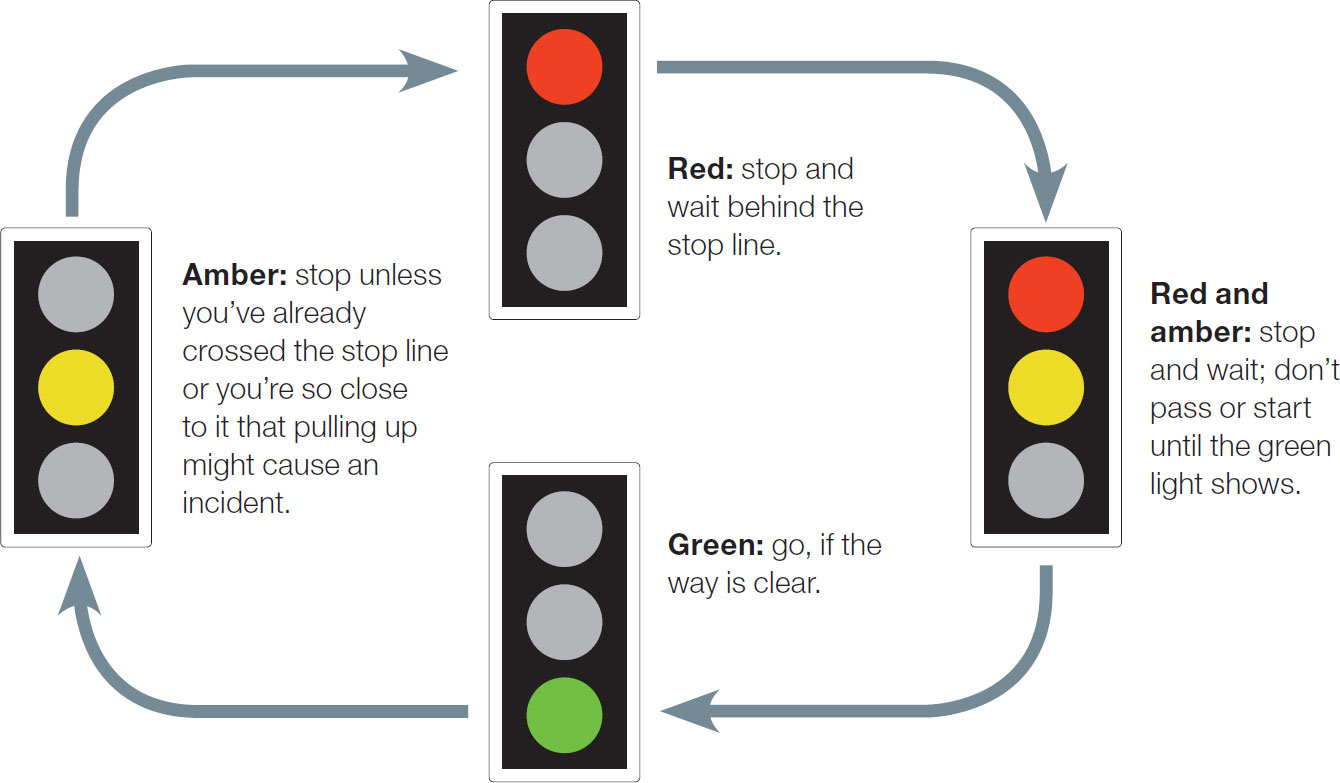
Approaching traffic lights can feel routine—until you see red and amber illuminated together. Many drivers hesitate at this moment, unsure whether to stop, prepare to go, or slow down further. Knowing what should you do when you’re approaching traffic lights that have red and amber showing together is essential for road safety, driving tests, and real-life decision-making.
This signal combination is not a trick or a warning to rush. It has a clear meaning, and misunderstanding it can lead to dangerous mistakes or test failures.
What red and amber together actually mean
When traffic lights show red and amber at the same time, it means:
- Stop.
- Get ready to go.
- Do not move yet.
This phase appears just before the light turns green. It allows drivers to prepare—select gear, check surroundings, and be ready to move smoothly when green appears.
Crucially, you must not cross the stop line while red and amber are showing together.
The correct action as you approach
If you are approaching and not yet at the stop line when red and amber appear together, the correct response is:
-
Slow down
-
Stop behind the stop line
-
Prepare to move when green shows
You should only move off once the light turns green.
If you are already stopped at the line, remain stationary but prepare for a smooth start.
Why drivers often get confused
Confusion usually comes from associating amber with “go” or “hurry up.” While amber alone warns that the light is about to turn red, red and amber together do not grant permission to proceed.
This misunderstanding is common among:
-
New drivers
-
Learners preparing for theory tests
-
Drivers switching between countries with different signal systems
I remember hesitating at these lights early in my driving days, watching the car next to me creep forward—only to realize later that moving early would have been a clear fault in a driving test.
What not to do at red and amber
When you see red and amber together, do not:
-
Move forward, even slowly
-
Roll past the stop line
-
Assume others moving means it’s allowed
-
Treat it as a green light
Even slight movement can count as a violation.
A real-world driving scenario
Imagine you’re approaching a busy intersection during rush hour. The light ahead is red. As you slow down, red and amber illuminate together. A car behind you inches forward, and you feel pressure to move.
The correct decision is to stay stopped.
Moving early could:
-
Cause confusion for cross traffic
-
Trigger red-light cameras
-
Lead to a collision if pedestrians are still clearing
The red-and-amber phase exists to coordinate traffic safely—not to rush drivers.
How this differs from amber alone
Understanding the distinction is vital:
| Signal | What it means | What you should do |
|---|---|---|
| Amber only | Light about to turn red | Stop if safe |
| Red only | Stop | Remain stopped |
| Red + Amber | Get ready | Stay stopped |
| Green | Go | Proceed if clear |
This comparison clears up one of the most common driving misunderstandings.
Legal and test implications
Moving on red and amber is treated the same as moving on red:
-
It can result in fines or penalty points
-
It counts as a serious fault on a driving test
-
It increases accident risk at junctions
Driving examiners pay close attention to how you respond to traffic signals, especially at controlled intersections.
Why the red-and-amber phase exists
This phase improves traffic flow and safety by:
-
Giving drivers reaction time
-
Reducing sudden acceleration
-
Synchronizing multiple lanes
-
Preventing hesitation when green appears
It creates smoother, safer movement once traffic is permitted to go.
What pedestrians and cyclists are doing at this time
While drivers see red and amber together:
-
Pedestrians may still be finishing their crossing
-
Cyclists may be clearing the junction
-
Cross traffic is completing its final movement
This is another reason why moving early is dangerous.
Common myths corrected
-
“It’s basically green” – False
-
“You can creep forward” – Incorrect
-
“Everyone does it” – Not legally allowed
-
“It saves time” – Negligible and unsafe
Understanding these myths helps drivers make calm, confident decisions.
How to handle it confidently as a learner
If you’re learning to drive:
-
Keep your foot on the brake
-
Select first gear (or ready position)
-
Check mirrors
-
Prepare clutch control (manual cars)
Confidence comes from knowing you’re doing the right thing—even if others rush.
Related: Universal Credit Cost of Living Payment: When Will It Be Paid?
Conclusion
So, what should you do when you’re approaching traffic lights that have red and amber showing together? The answer is clear: stop, stay stopped, and prepare to move only when green appears. This signal exists to improve safety and coordination—not to invite early movement. Understanding and respecting it protects you, other road users, and keeps you on the right side of the law.
FAQs
Can I move if the road looks clear?
No. You must wait for green, regardless of road conditions.
Is red and amber the same as amber alone?
No. Red and amber together mean stay stopped.
Will moving early fail a driving test?
Yes. It is considered a serious fault.
Why do some drivers move early?
Habit, impatience, or misunderstanding—not legality.
Does this apply at all junctions?
Yes, wherever standard traffic lights are used.