
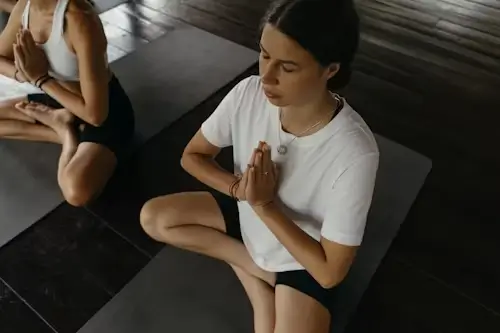
If you’ve ever attended a yoga class—whether in a quiet studio, a busy gym, or even online—you’ve likely noticed the same closing ritual. The instructor brings hands together, bows slightly, and says “Namaste.” Over time, many students begin to wonder: why do yoga classes end with namaste every time? Is it tradition, habit, spirituality, or simply etiquette?
The answer lies at the intersection of history, intention, respect, and human connection—far deeper than a simple word spoken at the end of a stretch.
The meaning of “Namaste” beyond translation
“Namaste” comes from Sanskrit and is commonly translated as “I bow to you.” But this translation barely scratches the surface. Traditionally, it conveys:
-
Respect from one person to another
-
Recognition of shared humanity
-
A gesture of humility and gratitude
-
A closing acknowledgment rather than a goodbye
In yogic philosophy, it is often interpreted as “the light in me honors the light in you.” Whether taken spiritually or symbolically, the essence is mutual respect.
Why it appears at the end, not the beginning
Many people ask why namaste is used at the end of class rather than the start. The timing is intentional.
At the beginning of a yoga session:
-
Minds are distracted
-
Bodies are tense
-
Energy is scattered
By the end:
-
Breath is steady
-
Awareness is heightened
-
A sense of calm or reflection is present
Namaste acts as a closing seal, marking the transition from shared practice back into individual lives. It’s less about greeting and more about acknowledging what just happened.
A ritual that signals completion
Humans respond strongly to rituals. Just as applause signals the end of a performance, namaste signals that the practice has concluded.
Ending class this way:
-
Creates emotional closure
-
Encourages stillness before leaving
-
Prevents abrupt mental shifts
-
Honors the shared experience
Without it, many classes would feel unfinished—like a sentence without punctuation.
The role of respect in teacher-student dynamics
In traditional yoga philosophy, learning is relational. Namaste at the end of class is not a command or instruction—it’s a gesture of equality.
The instructor is not saying:
“I taught you.”
They are saying:
“Thank you for practicing with me.”
This mutual acknowledgment matters. It reminds students that yoga is not something done to them, but something shared with them.
Cultural roots and modern interpretations
Historically, namaste has been used across South Asia as a respectful greeting and farewell—not exclusively in yoga.
In modern yoga classes:
-
Some treat it spiritually
-
Some treat it culturally
-
Some treat it symbolically
-
Some simply treat it as tradition
None of these interpretations are inherently wrong. The meaning adapts to the practitioner, not the other way around.
A moment of collective presence
One subtle reason namaste remains so common is that it creates a shared pause.
In that brief moment:
-
Phones are ignored
-
Conversations stop
-
The room is quiet
-
Everyone is present
I once attended a class where the instructor skipped the closing namaste, and the room instantly filled with movement and noise. The calm dissolved faster than expected. That contrast made me realize how powerful those few seconds actually are.
Does it have to be spiritual?
No—and this is important.
For many people:
-
Namaste is not religious
-
It does not require belief
-
It does not imply worship
It can simply mean:
“Thank you.”
“I respect you.”
“This moment mattered.”
Yoga studios increasingly emphasize that participation is optional. Students are not required to say it, bow, or place hands together.
Why it repeats every class
Repetition creates grounding. Ending with namaste every time:
-
Builds consistency
-
Signals safety and familiarity
-
Helps the nervous system relax
-
Encourages reflection
Just like savasana, it’s not about novelty—it’s about reliability.
How it compares to other class endings
In contrast to other fitness formats:
| Activity | How it ends |
|---|---|
| Gym workout | Timer or exhaustion |
| Spin class | Music fade |
| HIIT | Coach dismissal |
| Yoga | Intentional closure |
Yoga’s ending reflects its broader philosophy: awareness doesn’t stop when movement does.
Why some instructors are changing it
Not all classes end with namaste anymore. Some instructors choose alternatives like:
-
Silent bows
-
Gratitude statements
-
Breathing pauses
-
Simple “thank you”
This shift often comes from cultural sensitivity discussions rather than rejection of tradition. The intention—respect and closure—remains the same.
What matters more than the word itself
Ultimately, namaste is not about pronunciation, posture, or obligation. It’s about acknowledgment.
If spoken without intention, it becomes routine.
If spoken with awareness, it becomes meaningful.
The power lies not in the word, but in the pause it creates.
Related: Doctiplus: Rethinking Everyday Healthcare Access in a Digital World
Conclusion
So, why do yoga classes end with namaste every time? Because it marks completion, honors shared presence, and creates a respectful transition from practice back to daily life. Whether spiritual, cultural, or symbolic, namaste serves as a gentle reminder that yoga is more than movement—it’s connection. And sometimes, a quiet moment of acknowledgment is exactly what the body and mind need before moving on.
FAQs
Do I have to say namaste in yoga class?
No. Participation is always optional.
Is namaste religious?
It has cultural and spiritual roots, but it is not a religious requirement.
Is it disrespectful not to say it?
Not at all. Respect is about intention, not words.
Why do hands come together when saying namaste?
The gesture symbolizes balance, humility, and unity.
Can yoga classes end without namaste?
Yes. Many still do, but alternatives are increasingly common.