
If you’re preparing for a driving theory test or simply trying to become a more observant driver, you may have asked yourself: what colour are the reflective studs between a motorway and a slip road? It’s a small detail, but one that plays a big role in road safety—especially at night, in poor weather, or when visibility is limited.
Reflective studs are designed to guide drivers subtly but effectively. Each colour has a specific meaning, helping drivers understand exactly where they are on the road without needing to read signs or markings.
The correct answer explained clearly
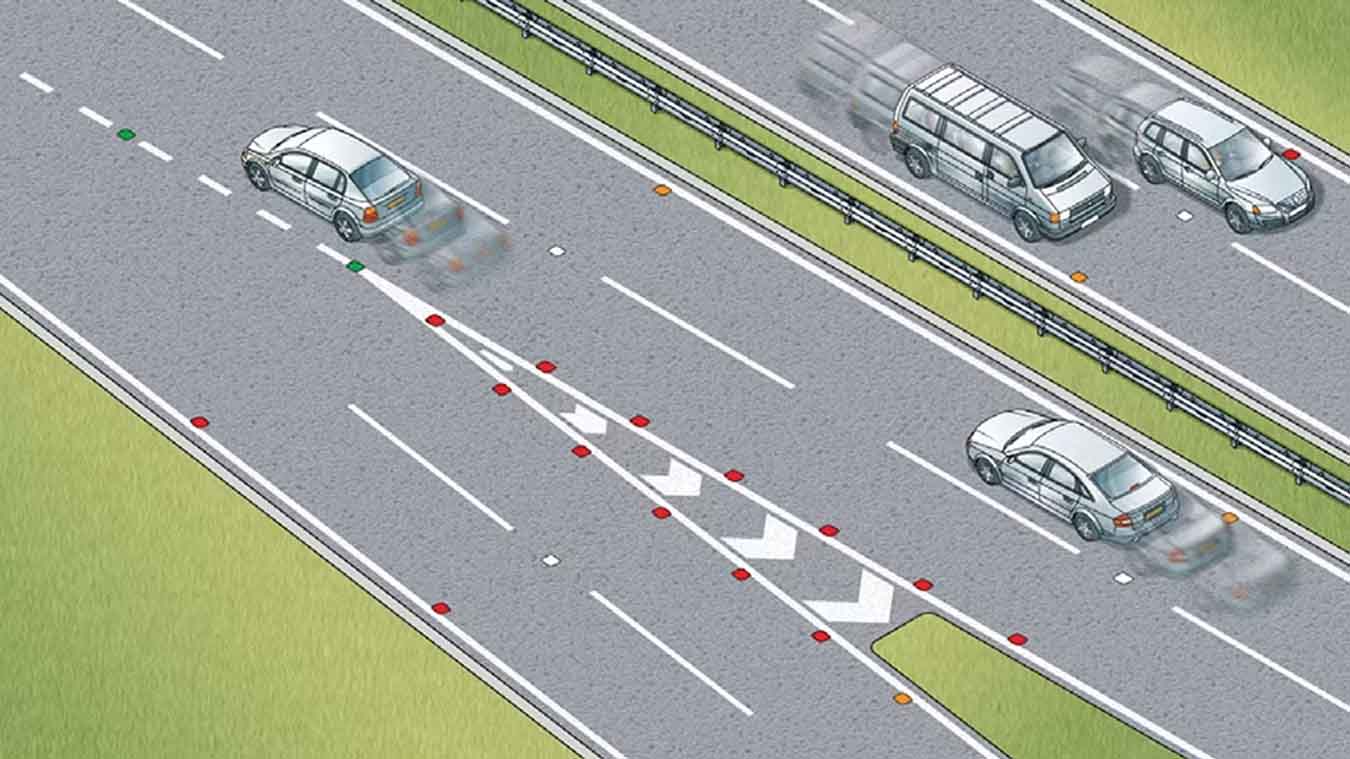
The reflective studs between a motorway and a slip road are green.
Green studs are used to mark:
-
Slip roads
-
Junctions
-
Entry and exit points on motorways
They signal a transition area—where traffic is joining or leaving the main carriageway.
Why green is used for slip roads
Colour choice on roads isn’t random. Green is deliberately used between the motorway and slip road because it stands out clearly against other stud colours while signaling a change in driving conditions.
Green studs help drivers recognize:
-
Merging zones
-
Diverging lanes
-
Areas requiring increased awareness
At high speeds, these visual cues allow drivers to react earlier and more smoothly.
How reflective studs work in real driving conditions
Reflective studs are especially important:
-
At night
-
In heavy rain or fog
-
When lane markings are hard to see
-
On unfamiliar roads
As headlights hit the studs, the colour reflects back to the driver, providing instant lane-position information without distraction.
I remember driving on an unfamiliar motorway late at night during heavy rain—the green studs were the only clear indicator that I was approaching a slip road. Without them, the lane change would have been far more stressful.
Understanding all reflective stud colours
To fully understand green studs, it helps to see how they compare with others used on UK motorways:
| Stud Colour | Meaning |
|---|---|
| White | Lanes and center of the carriageway |
| Red | Left edge of the road (hard shoulder side) |
| Amber | Central reservation |
| Green | Slip roads and junctions |
Each colour acts as a visual code, allowing drivers to interpret the road layout instantly.
Why this matters for driving tests
This question is a common driving theory test topic. Getting it wrong can cost valuable marks, but more importantly, understanding it improves real-world safety.
Examiners expect drivers to:
-
Recognize motorway layouts
-
Understand lane transitions
-
React appropriately at junctions
Knowing stud colours isn’t just memorization—it’s practical knowledge.
Common misconceptions drivers have
Many learners confuse green studs with:
-
White studs (general lanes)
-
Amber studs (central reservation)
The confusion usually comes from focusing on lane markings rather than reflective cues. At night, studs are often more visible than painted lines.
A real-world motorway scenario
Imagine driving at 70 mph on a busy motorway at night. Traffic is flowing fast, and visibility is limited. Ahead, you notice green reflective studs appearing on your left.
That’s your signal:
-
A slip road is approaching
-
Vehicles may be joining or leaving
-
Extra awareness is required
Recognizing this early helps you adjust speed or lane position smoothly.
Why reflective studs improve safety
Reflective studs:
-
Reduce sudden lane changes
-
Help prevent missed exits
-
Improve lane discipline
-
Reduce accidents at junctions
They act as a silent guide, especially when road markings are worn or weather conditions are poor.
How stud colours support driver confidence
For experienced drivers, stud colours work almost subconsciously. For learners, understanding them builds confidence and spatial awareness.
Once you know what each colour means, motorway driving feels less overwhelming—especially in challenging conditions.
Related: SCB d.o.o.: What the Name Means and Why It Matters in Business
Conclusion
So, what colour are the reflective studs between a motorway and a slip road? The answer is green. These studs mark junctions and slip roads, helping drivers identify merging and exiting areas quickly and safely. While it may seem like a small detail, it plays a crucial role in motorway navigation, night driving, and overall road safety. Knowing this doesn’t just help you pass a test—it makes you a better, more aware driver.
FAQs
Are green studs only used on motorways?
Primarily yes, especially at slip roads and major junctions.
Do other countries use the same colour system?
Not always. Colour meanings can vary by country.
Are reflective studs visible in fog?
Yes, they are designed to remain visible when painted lines are not.
Will I be tested on this in the theory exam?
Yes, it’s a common and important topic.
Do slip roads always have green studs?
On UK motorways, yes—they are the standard marker.