
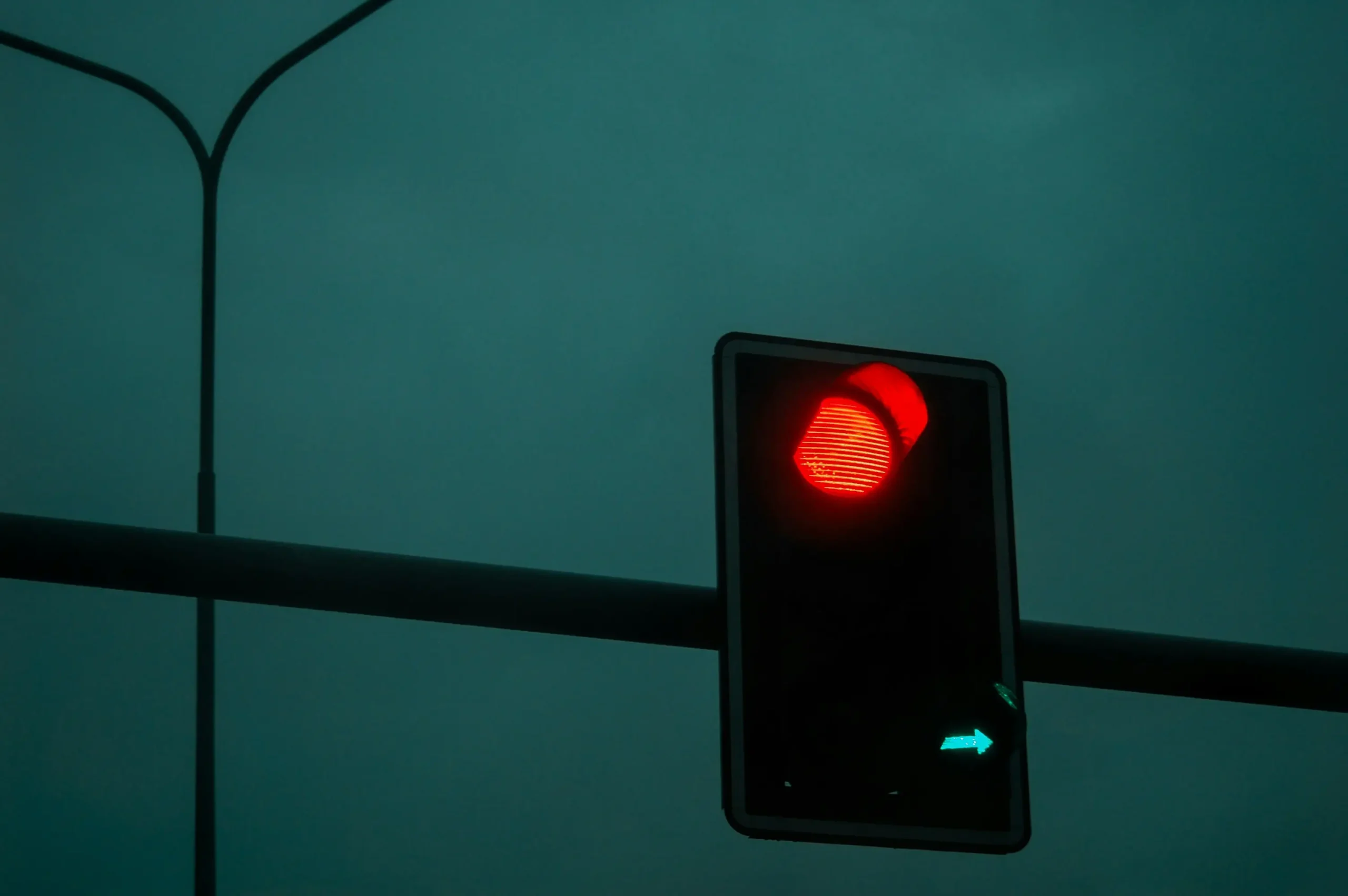
Running a red light might seem like a split-second mistake, but in the UK the consequences are serious. Even if accidental, going through a red light is treated as a traffic offence because drivers are legally expected to anticipate stops, control speed, and react safely to signals. In most cases, what happens if you go through a red light is a £100 fine and 3 penalty points on your licence, often detected by cameras or police observation. Those points stay on your record for 4 years and contribute to a total that can eventually lead to disqualification.
It doesn’t matter whether you accelerated by mistake, reacted late in the rain, or thought you could “just make it” before the change — the law places responsibility on the driver. I once watched a car in front of me hesitate at an amber, then speed up; a red light camera flashed instantly, and the driver later admitted his insurance premium jumped significantly after the penalty.
Immediate Consequence: Fines & Penalty Points
When a driver goes through a red light, a few things can happen depending on how the offence is detected:
-
Red Light Camera Capture: Automatically issues a Notice of Intended Prosecution (NIP).
-
Police Observation: Can result in a roadside stop or postal notice.
-
Accident Resulting: May escalate the offence into a far more serious legal matter.
Typical UK Penalty:
-
£100 fine
-
3 penalty points on the licence (endorsement code TS10)
These points remain visible to insurers for 4 years, and insurers treat this as a behavioural risk marker.
When the Penalty Can Increase
Red-light running can escalate beyond a fixed penalty, depending on what happens next:
| Situation | Possible Outcome |
|---|---|
| Minor breach, no danger | £100 fine + 3 points |
| Repeated offences / high points total | Short driving ban or court summons |
| Dangerous driving or loss of control | Higher fine + possible disqualification |
| Causing a collision | Prosecution & significantly higher punishment |
| Death caused through offence | Custodial sentence (prison), long-term ban |
Magistrates’ courts can impose fines of up to £1,000 for more serious cases — or £2,500 for offences in certain vehicles such as HGVs, buses, or those used commercially.
Insurance Impact: The Hidden Cost
The fine might feel manageable, but insurance companies see a red-light conviction as a major indicator of risk. Premiums often increase because insurers classify the incident alongside:
-
Late-reaction collisions
-
Poor hazard anticipation
-
Potential careless driving
-
Increased accident probability
Even a simple fixed penalty can affect a policy for years.
How Red Light Cameras Work
Cameras sit at junctions to detect vehicles crossing after the signal has turned red. They don’t flash for amber or green, only after the violation occurs. Most systems operate with:
-
Induction loops or sensors in the road surface
-
A calibrated delay to ensure fairness
-
Photographic evidence of the exact moment of breach
The camera isn’t guessing — it captures:
-
The vehicle position
-
The time stamp
-
The signal state (confirmed red)
-
Registration plate details
These images are used as legal evidence.
Why Drivers Still Make Mistakes
Most red-light breaches aren’t malicious. They often happen due to:
-
Misjudging amber time
-
Wet roads delaying stopping distance
-
Accelerating to “beat the light”
-
Distraction or rushing
-
Poor visibility or glare
-
Tailgating and momentum
Even so, the law views these explanations as preventable driver errors, not valid defences.
A Professional Scenario Example
Imagine approaching a junction on a rainy evening. The light turns amber. Rather than slowing, a driver continues through. The light changes to red before they clear the junction. A camera flashes.
The following steps occur:
-
A Notice of Intended Prosecution arrives in the post.
-
The keeper has 28 days to respond with driver details.
-
A fixed penalty or court summons is then issued based on response.
That single decision — only seconds long — now carries multi-year consequences.
What About Emergency Vehicles?
There’s a common belief that moving through a red light to let an ambulance or fire engine pass is always acceptable. Legally, that’s not guaranteed. A driver is still responsible for assessing risk and could be penalised if the manoeuvre is considered unsafe or unnecessary. Courts may consider it a special reason, but it isn’t an automatic exemption.
Accidents & Criminal Liability
Running a red light dramatically increases the chance of a right-angle collision, one of the most dangerous types due to the point of impact.
If a red-light breach causes:
-
serious injury
-
death
-
property damage
-
pedestrian impact
…the charge may escalate to careless or dangerous driving. In the most severe cases, causing death by dangerous driving can result in imprisonment, long-term disqualification, and life-changing legal repercussions.
Can You Appeal a Red Light Ticket?
An appeal may succeed only if:
-
The vehicle was cloned or misidentified
-
Clear physical evidence proves the light malfunctioned
-
Camera inaccuracies or miscalibrations are proven
-
Someone else was driving and can be identified
“I didn’t realise it changed” is not an accepted defence.
Related: Alveoli Adaptations: How Tiny Air Sacs Are Perfectly Designed for Gas Exchange
Conclusion
So, what happens if you go through a red light? In the UK, you’ll usually face a £100 fine and 3 points, with more serious consequences if danger, repetition, or accidents occur. Cameras, police enforcement, and insurance systems treat the offence as a major road risk indicator. Whether accidental or not, the law requires drivers to anticipate stops, maintain control, and avoid pushing amber limits.
Stopping safely is always cheaper than trying to beat the light.
FAQs
Do you always get caught if you run a red light?
Not always — but cameras are common, and police can still act.
How long do penalty points last?
4 years on record; insurers may consider them throughout.
Can I lose my licence for one offence?
Unlikely, but repeat offences can trigger disqualification.
Are amber lights a signal to speed up?
No. Amber means prepare to stop if safe, not accelerate.
Is it illegal to move for an ambulance?
Possible to be penalised if done unsafely — judgement and caution matter.