
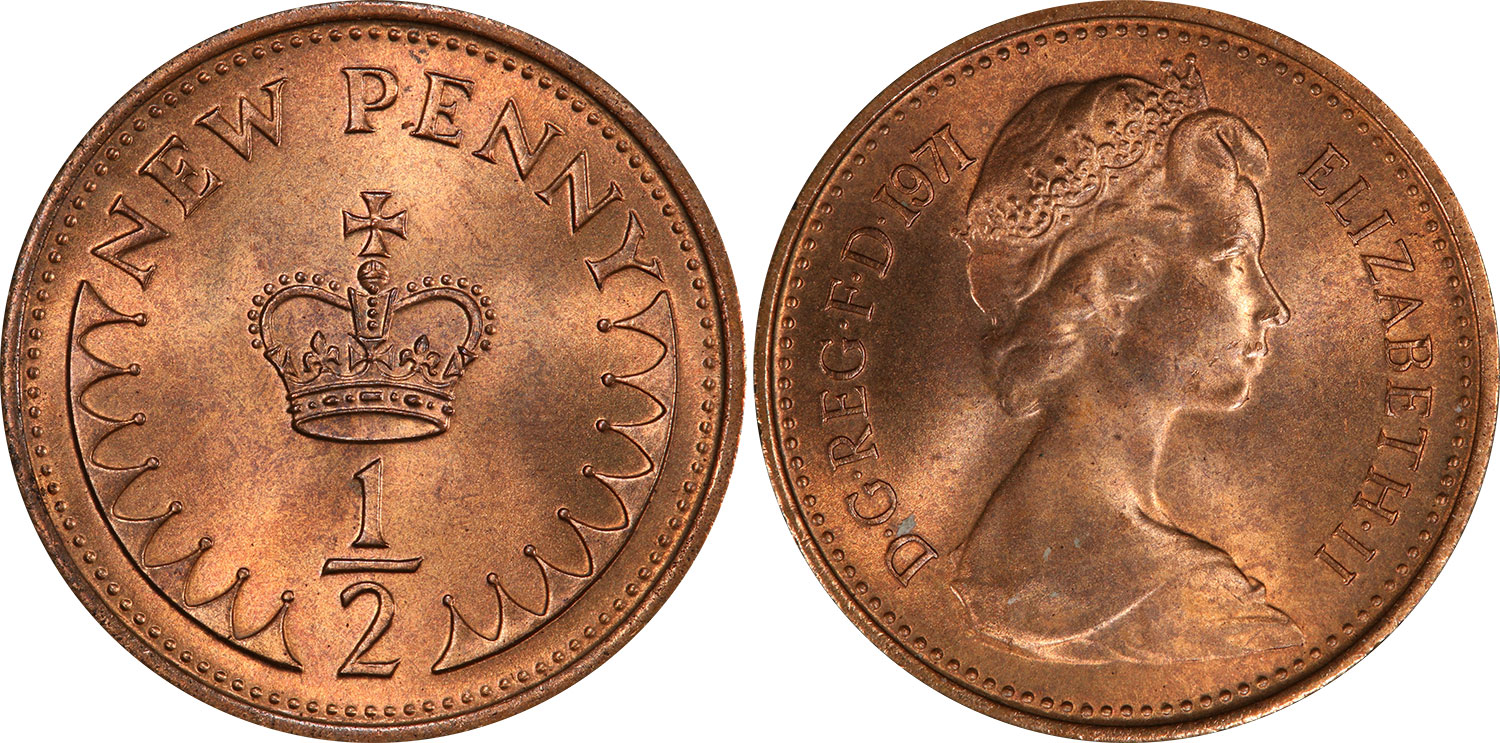
Finding an old coin in a drawer often sparks the same question: Is this actually worth anything? That curiosity is exactly why so many people search how much is a 1971 half penny worth today. The answer isn’t as simple as a single price, because “1971 half penny” can refer to two very different coins depending on the country, metal composition, and condition.
Some are worth less than a dollar. Others—under very specific circumstances—have sold for hundreds or even thousands. Knowing which one you have is where real value begins.
First Things First: Which 1971 “Half Penny” Do You Have?
This is the most important step, and it’s where many people get confused.
There are two common coins people mean when they say “1971 half penny”:
-
A U.S. 1971 Kennedy Half Dollar (50 cents)
-
A UK 1971 Halfpenny, issued during Britain’s first year of decimal currency
Despite similar wording, these coins differ dramatically in history, mintage, and value.
The U.S. 1971 Kennedy Half Dollar: Value Breakdown
The American 1971 half dollar features John F. Kennedy and was produced after the U.S. removed silver from most circulating coins. That detail alone explains why most examples aren’t highly valuable.
Standard circulated examples are usually worth only slightly more than face value. In worn or average condition, many sell for around $0.60 to $0.80.
Where things get interesting is condition and errors.
Uncirculated coins—those that never entered everyday use—can command a modest premium. Coins graded in higher Mint State levels may reach a few dollars, especially if they have sharp detail and original luster.
However, error coins are where real value appears. Rare mistakes such as:
-
Being struck on a silver planchet
-
Doubled die obverse or reverse errors
-
Misaligned strikes
have sold for hundreds or even thousands of dollars, though these are extremely uncommon.
UK 1971 Halfpenny: A Coin of History, Not Rarity
The British 1971 halfpenny holds historical importance as part of the UK’s decimalization—a major shift in currency that year. Over 100 million were minted, making most examples very common.
In circulated condition, a typical 1971 UK halfpenny is usually worth only a small amount, often less than one pound or dollar equivalent.
Value increases slightly for:
-
Uncirculated coins
-
Coins from official proof sets
-
Pieces with flawless surfaces and sharp edges
Even then, prices are generally modest unless the coin is in exceptional proof condition.
Side-by-Side Value Comparison
| Coin Type | Typical Value (Circulated) | Higher-End Value |
|---|---|---|
| US 1971 Kennedy Half Dollar | $0.60–$0.80 | $5–$2,000+ (errors) |
| UK 1971 Halfpenny | Very low | $1–$10 (proofs) |
This comparison shows why identifying the coin correctly matters more than age alone.
What Really Determines Value?
Several factors influence what a 1971 half penny is worth today.
Condition (Grade)
Coins are graded on a scale from poor to mint state or proof. The fewer scratches, wear marks, and discoloration, the higher the value.
Errors and Variations
Manufacturing mistakes are rare and collectible. A normal coin becomes valuable only when it’s abnormal in a documented way.
Mint Mark
For U.S. coins, mint marks such as “D” (Denver) or “S” (San Francisco) can affect desirability, especially for proofs or errors.
Original Packaging
UK proof coins kept in original presentation cases often sell for more than loose examples.
A Common Situation for Coin Owners
Someone inherits a small tin of coins from a relative and finds a shiny 1971 half dollar. A quick online search suggests it might be valuable. After closer inspection, it turns out to be a standard clad coin with heavy wear—worth only face value.
But in another case, a collector notices unusual coloring and weight, has it professionally graded, and discovers it was struck on the wrong metal planchet. That’s the difference knowledge makes.
One Personal Experience
I once checked a 1971 half dollar thinking it was special, only to realize its real value was the history behind it, not the price tag.
How to Check Your Coin at Home
Before paying for professional grading, you can do a few basic checks:
-
Weigh the coin (errors often weigh differently)
-
Check the edge (silver coins have a solid edge, not copper stripes)
-
Use a magnifying glass to look for doubling on letters or dates
-
Compare images from reputable coin catalogs
If something looks unusual, then professional appraisal may be worthwhile.
Should You Get It Professionally Graded?
Professional grading only makes sense if:
-
The coin appears uncirculated
-
You suspect an error
-
You plan to sell it to collectors
For common circulated examples, grading costs usually exceed the coin’s value.
Why Most 1971 Half Pennies Aren’t Rare
Age alone doesn’t make a coin valuable. Millions of 1971 half pennies still exist, and supply far outweighs demand for standard versions. Collectors pay premiums for scarcity, condition, and uniqueness—not just nostalgia.
Related: Unlock Your Digital Identity with amydashleigh16
Conclusion
So, how much is a 1971 half penny worth today?
For most people, the answer is modest: a little over face value for U.S. coins, and minimal value for UK examples unless they’re in pristine or proof condition.
True high-value examples exist, but they’re the exception—not the rule—and almost always involve rare errors or exceptional preservation. The real worth of many 1971 half pennies lies in their history, not their market price.
Knowing what you have—and why—makes all the difference.
Frequently Asked Questions
Is a 1971 half penny made of silver?
Most are not. Standard U.S. 1971 half dollars are clad, not silver.
Can a UK 1971 halfpenny be valuable?
Only in proof or near-perfect condition; most circulated examples are common.
What’s the rarest 1971 half dollar error?
Coins struck on silver planchets or with major doubled dies are among the rarest.
Should I clean my coin before selling it?
No. Cleaning can reduce value significantly.
Where can I sell a valuable example?
Reputable coin dealers, auction houses, or certified online marketplaces are best.