
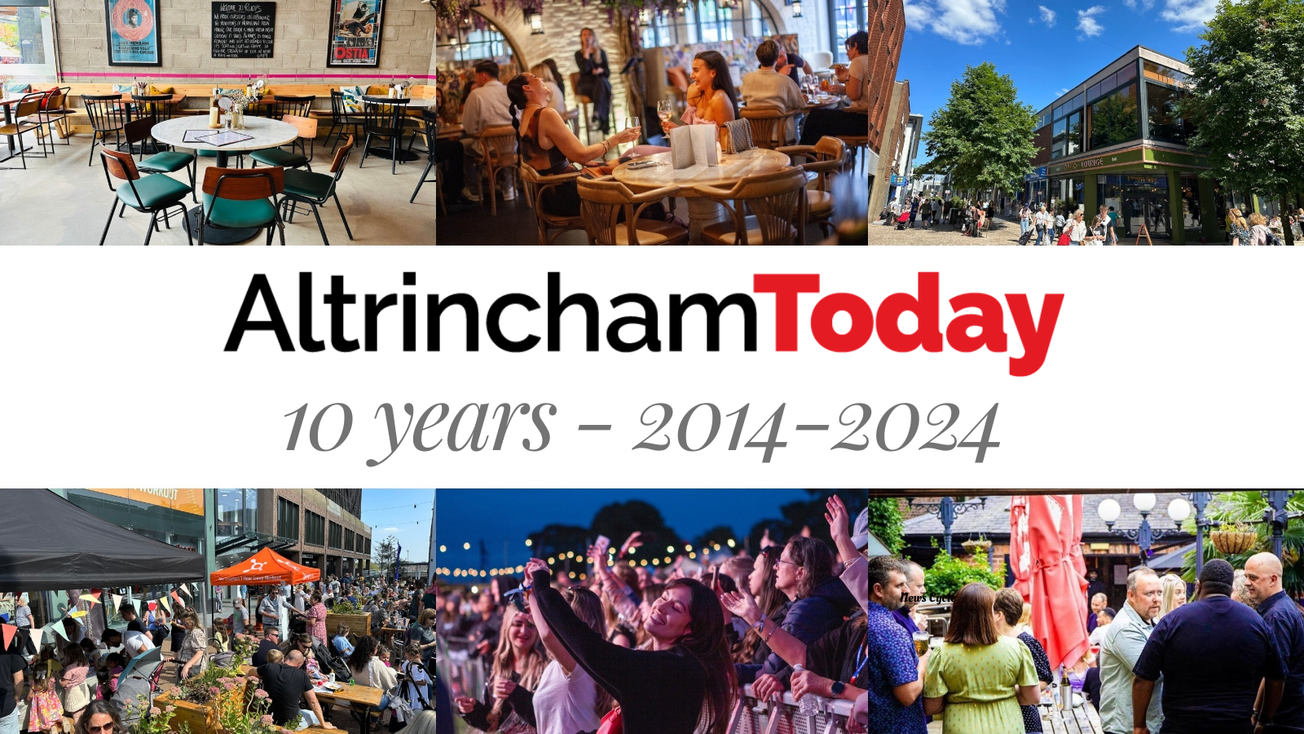
Altrincham used to be the poster child for the “dying high street” story – empty units, boarded-up shops, and locals driving elsewhere to spend their money. Fast-forward to today and it’s almost unrecognisable: a buzzing market town, foodie hotspot, property magnet and commuter favourite on the edge of Manchester’s city region. “Altrincham today” isn’t a throwaway phrase; it’s shorthand for one of the UK’s most talked-about regeneration success stories.
From “Ghost Town” to Northern Success Story
Just over a decade ago, Altrincham regularly appeared on lists of struggling town centres, with vacancy rates among the highest in the country. That narrative began to flip when Trafford Council and local partners backed a bold plan to reinvent Altrincham as a modern market town rather than a mini shopping mall. Investment went into the public realm, transport and, crucially. The historic market itself – with around £900,000 spent on refurbishing Market House and the surrounding market square, plus millions more on streetscape and transport interchange improvements.
The result? Footfall returned, independents moved in, national brands followed, and Altrincham turned into a case study for how careful planning, public money and entrepreneurial spirit can genuinely change a place’s trajectory.
Altrincham Market: The Beating Heart of the Town
If you say “Altrincham today” to anyone in Greater Manchester, odds are the first thing they mention is the market. The Victorian covered hall and outdoor stalls have been reborn as a hybrid of food hall, craft showcase and community living room. Independent kitchens, coffee bars, wine specialists, bakeries and street-food vendors now anchor the Market House, drawing visitors from across the region almost every day of the week.
Outside, regular traders sell everything from artisan bread and cheese to vintage clothing, plants, handmade ceramics and jewellery. The market has been widely credited as the catalyst for Altrincham’s turnaround, spawning copycat concepts in other towns and proving that high streets don’t have to rely solely on big-box retail to survive.
The vibe is casual but curated: long shared tables, no reservations, lots of families and dogs, and queues that tell their own story about demand. For many locals, the market is where they meet friends, celebrate birthdays and show off the town to visiting relatives – it’s become part of daily life, not just a tourism attraction.
Regeneration, New Homes and the Future Skyline
Altrincham news revival isn’t limited to better brunch and craft beer. The town centre is now the focus of substantial housing and commercial investment. Plans approved in 2025 will see 88 new homes built on New Street, replacing outdated courts and adding modern apartments in the heart of town.
Beyond that, a wider regeneration pipeline includes:
-
Major mixed-use schemes around the Stamford Quarter and The Foundation redevelopment, adding tens of thousands of square feet of office, retail and leisure space.
-
Public-realm projects to create more pedestrian-friendly spaces between the Metrolink interchange and the shopping streets.
-
Leisure centre transformation, with a £20m revamp bringing up-to-date sports and wellness facilities to the town.
The big idea is to densify the centre with more residents, better amenities and high-quality streets, so Altrincham remains busy all day and into the evening rather than just at traditional shopping hours.
Transport Links and the Tram-Powered Lifestyle
Altrincham has long been loved by commuters thanks to its integrated transport hub, where trams, trains and buses all converge. It sits at the end of a Metrolink line that delivers passengers straight into Manchester city centre, while rail services connect to wider Greater Manchester and Cheshire.
That network is set to strengthen further. Greater Manchester is pumping millions into future tram and tram-train expansion, with a long-term plan that aims to bring 90% of residents within a five-minute walk of frequent services. Altrincham is already well-plugged-in, but improvements to the wider network enhance. Its appeal for professionals who want leafy streets, outstanding schools and fast access to the city’s jobs and nightlife.
The Bee Network vision – a fully integrated public transport system – positions Altrincham as one of the best-connected suburban hubs in the region.
Property, Lettings and the Price of Popularity
Of course, success has a price tag. Altrincham today is one of the most expensive places to live in Greater Manchester. Average asking prices in the WA14 postcode hover just under £500,000, while neighbouring WA15, which covers parts of Altrincham and Bowdon, pushes over £620,000. Detached homes in particular command eye-watering sums compared with the regional average.
On the rental side, strong demand and limited supply mean two-bed apartments often sit in the £1,200–£1,400 per month range. With family homes easily topping £1,500. For buy-to-let landlords and investors, the town is more of a capital-growth play than a high-yield bargain: yields are moderate, but long-term prospects are solid, fuelled by excellent schools, green space and transport.
For first-time buyers and young families, It can make Altrincham feel out of reach. Some are pushed towards more affordable nearby areas like Stretford, Partington or further into Cheshire. While still using Altrincham as their go-to place for shopping and socialising.
Community, Culture and Everyday Life
Strip away the regeneration headlines and you find a town that’s busy seven days a week. Stamford Quarter is filling up with a mix of national brands and independents; side streets hide cocktail bars. Micro-breweries and speciality coffee shops; and regular events – from artisan markets to seasonal festivals – keep the calendar full.
Families are drawn by Trafford’s famously strong schools, many of them rated “Outstanding” by Ofsted. While green spaces and nearby countryside make weekend walks an easy win. Property Investments UK For older residents who remember the town’s quieter years, the current buzz can feel surreal – the same streets that once felt tired and empty now host queues for brunch and late-night conversations on café terraces.
Yet Altrincham hasn’t entirely lost its small-town feel. The market is still full of local makers and traders who know regulars by name. And community groups remain active in everything from arts to sports. The challenge for the next decade will be balancing that authenticity with ongoing development pressures and rising costs.
Altrincham Today – and Tomorrow
So what does “Altrincham today” really mean? It means a town that refused to accept decline as inevitable. It means public-sector vision combined with private-sector creativity. A Victorian market reborn as a 21st-century social hub, shiny new apartments rising next to historic streets. And trams ferrying commuters home to a place that actually feels worth coming back to.
The story isn’t finished. More homes, more offices, more transport investment and more public-realm projects are already in the pipeline. Risk is that success makes the town less accessible for the people who gave it character in the first place. The opportunity is to use that momentum to create an Altrincham that stays lively. Inclusive and genuinely local – not just a pretty backdrop for property brochures.
Related: Why Software Doxfore5 Is Dying: The Rise, Fall, and Lessons from a Fading Platform
Either way, one thing is clear: when people talk about thriving town centres in Britain. They’ll keep using the same two words as a benchmark for what’s possible – Altrincham today.