
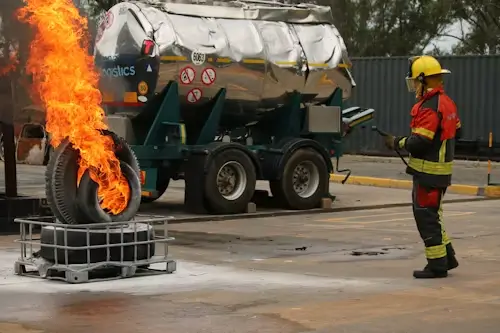
If you have ever wondered how a small flame suddenly turns into a dangerous fire, the answer often lies in a simple but powerful process: combustible materials catch fire through direct contact with flames. This is the most immediate and visible way fires spread, and it’s the reason everyday objects like paper, wood, fabric, or plastic can ignite in seconds when exposed to an open flame.
People search for this topic for practical reasons. Some want to understand fire safety at home, others encounter it in academic settings, construction work, laboratories, or industrial environments. Many are simply trying to make sense of fire behavior after witnessing a close call—like a candle tipping over or a cooking flame touching a nearby towel.
At its core, direct flame contact is about heat, chemistry, and timing. When flames physically touch a combustible surface, the material absorbs intense heat faster than it can dissipate it. Once the temperature rises high enough, ignition becomes inevitable.
How Direct Flame Contact Leads to Fire
When a flame touches a combustible material, several things happen almost simultaneously. The heat from the flame doesn’t just warm the surface; it actively breaks the material down.
The first step is heat transfer. Flames deliver concentrated thermal energy directly to the material’s surface. Unlike indirect heating, there is no buffer—no air gap, no delay.
Next comes pyrolysis, a chemical process where heat causes solid materials such as wood, cloth, or cardboard to decompose. Instead of burning immediately, these materials release flammable gases and vapors. Wood, for example, doesn’t burn as a solid; it burns because the gases released from it ignite.
Finally, ignition occurs. Those gases mix with oxygen in the air and ignite, producing new flames. At that moment, the fire is no longer limited to the original flame—it has created its own fuel source and can continue spreading.
This is why direct contact is considered the most straightforward fire-spread mechanism. There is no need for prolonged exposure or special conditions. A few seconds of contact can be enough.
Why This Is the Most Common Way Fires Start
Direct flame contact is common because it often involves ordinary human activity. Candles, stoves, matches, lighters, welding torches, and open fireplaces all produce flames that are easily capable of igniting nearby materials.
In many cases, people underestimate how quickly ignition happens. A curtain doesn’t need to sit in a flame for minutes. A brief brush against a candle can be enough to start a fire that grows faster than expected.
I once watched a small kitchen flame catch the edge of a paper towel, and the speed at which it flared up completely changed how seriously I treat open flames indoors.
What makes this mechanism especially dangerous is that it bypasses many early warning signs. There may be no smoke buildup or gradual heating—just immediate ignition.
Direct Contact Compared to Other Ways Fire Spreads
Fire does not always need to touch something to make it burn. It can also spread through heat radiation, convection, or conduction. However, these methods behave very differently.
| Fire spread method | How ignition happens | Typical speed | Common examples |
|---|---|---|---|
| Direct flame contact | Flames physically touch combustible material | Very fast | Candle igniting fabric, match lighting paper |
| Radiant heat | Heat waves raise temperature from a distance | Moderate | Nearby furniture igniting from a large fire |
| Convection | Hot gases move heat upward and outward | Variable | Fire spreading through stairwells |
| Conduction | Heat travels through solid materials | Slow | Metal beams transferring heat to other areas |
What stands out is how little warning direct contact provides. Other mechanisms often require sustained heat or distance-based exposure, whereas direct contact works instantly.
Practical, Real-Life Usage Example
Imagine a small retail shop during a power outage. The owner lights a candle behind the counter to see better. A stack of cardboard packaging sits nearby, pushed just a little too close. A sudden draft causes the flame to lean, brushing the edge of the cardboard. Within seconds, the cardboard begins to burn, releasing thick smoke and spreading fire upward. There was no electrical fault, no chemical reaction—just flame touching fuel. Situations like this explain why fire investigators so often trace incidents back to simple, direct contact rather than complex failures.
Benefits of Understanding This Fire Mechanism
Understanding how combustible materials catch fire through direct contact with flames has clear advantages:
-
It improves everyday safety awareness, especially around candles, cooking, and heating devices.
-
It helps people recognize high-risk setups, such as flammable materials stored near open flames.
-
It supports better decision-making in workplaces where hot work or open flames are common.
-
It provides a foundation for learning broader fire-prevention strategies.
Knowledge doesn’t stop fires on its own, but it changes behavior—and behavior is often the biggest factor.
Limitations and Common Misconceptions
One common misunderstanding is that materials must be “highly flammable” to ignite on contact. In reality, many ordinary items are combustible even if they don’t seem dangerous at first glance. Wood, cotton, paper, and some plastics can all ignite quickly under the right conditions.
Another misconception is that moisture or thickness always prevents ignition. While damp or dense materials may resist burning longer, direct flame contact can still initiate pyrolysis if the heat is intense enough.
Finally, people sometimes assume fire spreads evenly. In truth, flame behavior depends on airflow, material orientation, and surface area. A hanging fabric ignites faster than a flat board because flames travel upward with hot gases.
Practical Tips for Reducing Risk
Avoiding direct flame contact fires doesn’t require specialized equipment—just thoughtful habits.
Keep open flames well clear of combustible materials, even those that seem harmless. Store paper products, fabrics, and packaging away from stoves, candles, and heaters. Never leave open flames unattended, especially in enclosed spaces. In work environments, follow hot-work protocols and ensure fire-resistant barriers are in place.
The key insight is simple: if a flame can physically touch it, it can probably ignite it.
Related: When May You Overtake on a One-Way Street? A Practical Guide for Real Drivers
Conclusion
The idea that combustible materials catch fire through direct contact with flames may sound obvious, but its simplicity is what makes it so dangerous. Direct contact removes delays and safeguards, allowing ignition to happen almost instantly. By understanding the heat transfer, chemical breakdown, and ignition process involved, people can better recognize risks and prevent avoidable fires.
Fire safety doesn’t always depend on advanced systems or complex science. Sometimes, it comes down to recognizing how quickly a flame can turn everyday materials into fuel.
FAQs
Can any combustible material catch fire instantly when touched by a flame?
Not instantly in every case, but many common materials ignite within seconds if the flame is hot enough and contact is sustained.
Is direct flame contact more dangerous than radiant heat?
Yes, because it provides immediate heat transfer without distance, making ignition much faster and less predictable.
Why doesn’t metal catch fire when touched by flames?
Most metals are not combustible under normal conditions; they conduct heat away rather than breaking down into flammable gases.
Does airflow affect direct contact fires?
Absolutely. Airflow can tilt flames, increase oxygen supply, and accelerate ignition when flames touch combustible surfaces.
How can this knowledge help in everyday life?
It encourages safer placement of candles, better storage of flammable items, and greater awareness of how quickly small flames can escalate into serious fires.