
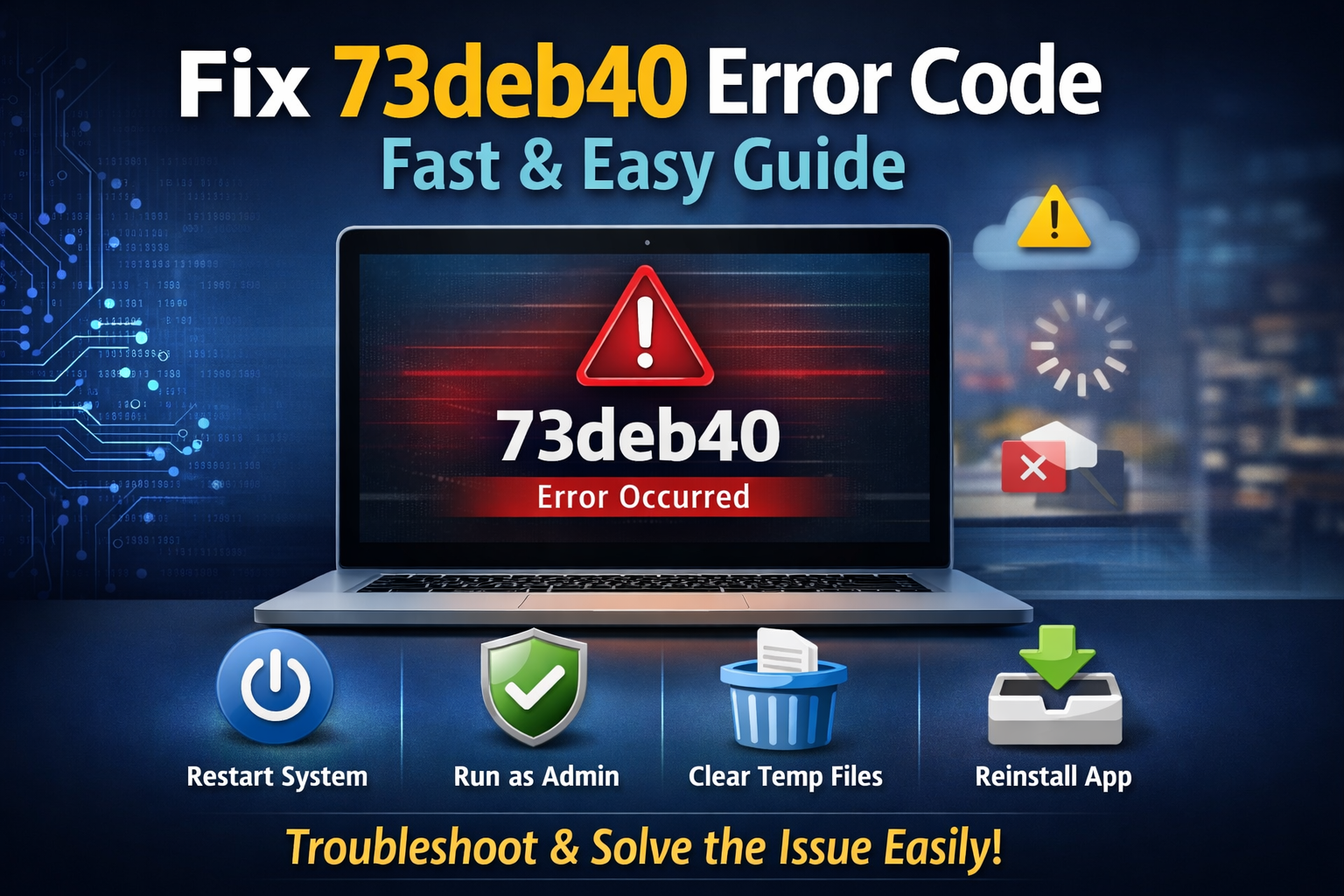
Running into a strange system code like 73deb40 can feel like your device just started speaking another language. One moment everything works fine — the next, an update fails, an app won’t open, or a process crashes with a cryptic string of numbers and letters. That’s where this guide comes in.
Codes like this are typically system-generated identifiers used to pinpoint a failure inside software, firmware, or a server-side process. While the label itself may look random, it usually maps to a specific interruption: corrupted data, a permission conflict, a failed sync, or a component that didn’t load correctly.
I’ve personally hit a similar error while installing a system patch on my laptop, and the fix turned out to be much simpler than the scary code made it seem.
Let’s break it down in plain English.
What Is 73deb40?
This type of alphanumeric string is commonly used as a debug or exception identifier. Instead of showing users a long technical explanation, systems generate compact codes that help support teams trace the issue quickly.
It generally appears in situations like:
-
Software installation or update failures
-
App launch crashes
-
System configuration changes
-
Account sync interruptions
-
Driver or plugin loading errors
Rather than being the problem itself, the code is a symptom marker pointing to something that didn’t complete as expected.
Why This Error Happens
Most occurrences trace back to one of five root categories.
1. Corrupted Temporary Files
Incomplete downloads, interrupted updates, or forced shutdowns can damage temporary system data.
2. Permission Conflicts
The system or application may lack the rights needed to access files or registry settings.
3. Outdated Dependencies
Missing libraries, drivers, or background services can prevent modules from loading properly.
4. Network Interruptions
If a cloud-based process loses connection mid-task, the operation may fail with a system code.
5. Security Software Interference
Antivirus or firewall tools sometimes block legitimate processes, especially during updates.
System Error Occurrence Case Study
Imagine a small business owner updating accounting software before tax season. The update stops midway and displays a failure screen showing 73deb40. Panic sets in — payroll needs to be processed that day.
In most cases like this, the issue isn’t data loss. It’s often an incomplete update file or blocked permission. Restarting, clearing cache files, or reinstalling usually restores normal operation without affecting stored information.
How to Fix It (Step-by-Step)
Step 1: Restart the System
A reboot clears memory conflicts and stuck processes. Surprisingly, this resolves many temporary faults.
Step 2: Run as Administrator
Right-click the application or installer and choose Run as Administrator to avoid permission restrictions.
Step 3: Clear Temporary Files
Delete system temp files to remove corrupted installation fragments.
Windows example:Settings → System → Storage → Temporary Files
Step 4: Check for Pending Updates
Operating systems sometimes need prerequisite patches before certain programs can run correctly.
Step 5: Disable Security Software Temporarily
Turn off antivirus/firewall briefly while installing or launching the app (re-enable afterward).
Step 6: Reinstall the Application
A fresh install replaces damaged files and missing components.
Quick Comparison of Possible Causes
| Symptom Behavior | Most Likely Cause | Difficulty to Fix | Risk Level |
|---|---|---|---|
| Appears after update | Corrupt update file | Easy | Low |
| Happens on startup | Missing dependency | Moderate | Low |
| Occurs during sync | Network instability | Easy | Low |
| Only one user affected | Permission issue | Easy | Low |
| Random crashes | Software conflict | Moderate | Medium |
When to Worry (Rare Cases)
Most of the time, this code signals a routine software hiccup. However, investigate further if:
-
It repeats after reinstalling
-
Multiple apps start failing
-
The system becomes unusually slow
-
Storage errors appear alongside it
That could suggest disk issues or deeper system corruption.
Prevention Tips
-
Keep your OS and drivers updated
-
Avoid force shutdowns during installations
-
Maintain stable internet during downloads
-
Use reputable antivirus software
-
Periodically clean system junk files
A well-maintained system rarely throws persistent debug codes.
Why Understanding These Codes Matters
Instead of treating every system message as a disaster, recognizing that such identifiers are diagnostic tools gives you control. Most are fixable without technical support, and knowing the pattern behind them saves time, stress, and sometimes money.
Related: Maau2324: Mystery Viral Trend Explained
Conclusion
73deb40 isn’t a virus, hack, or sign of system failure in most cases. It’s a structured alert telling you something didn’t load, install, or connect correctly. Restarting, clearing temporary data, updating components, or reinstalling software resolves the majority of situations.
The key is not the code itself — it’s the environment around it. Once you address permissions, updates, and file integrity, the issue typically disappears.
FAQs
Is this error dangerous?
Usually no. It’s commonly linked to routine software interruptions.
Can it cause data loss?
Rarely. It typically affects processes, not stored files.
Does this mean my device is infected?
No, system-generated codes are not indicators of malware by default.
Why does it appear after updates?
Updates modify core files. If the process is interrupted, the system flags an incomplete state.
Should I contact support?
Only if the issue repeats after basic troubleshooting.