
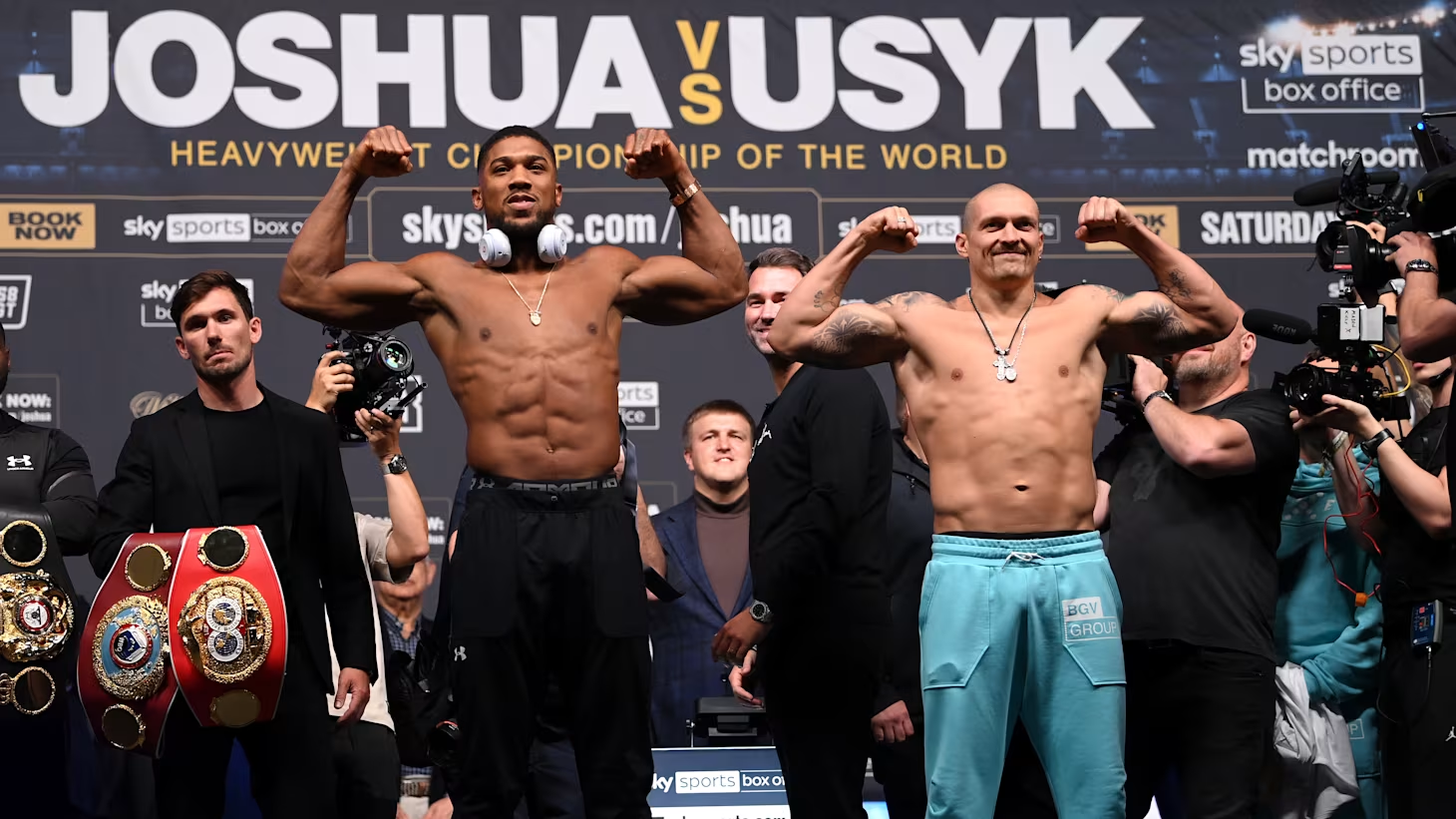
The Night the Script Flipped
Anthony Joshua entered Tottenham Hotspur Stadium on 25 September 2021 with three heavyweight belts and a blueprint built on size, jab, and destructive finishing power. Oleksandr Usyk arrived with an entirely different proposition: a southpaw puzzle honed across an undisputed cruiserweight reign and Olympic pedigree.
Over twelve cerebral rounds, Usyk flipped the script outmaneuvering, outpunching, and outthinking Joshua to win a unanimous decision and lift the WBA (Super), IBF, and WBO titles. Official cards read 117–112, 116–112, and 115–113, in front of a vast London crowd at Spurs’ stadium, which set a new attendance mark for boxing there.
Numbers That Tell the Story
Fights at the elite level are often decided by small, repeatable advantages. Usyk’s edge showed up in the punch data: 148 total connects to Joshua’s 123, with Usyk closing strong 29 landed shots in Round 12, the most ever by a Joshua opponent. Those numbers capture what the eye saw: perpetual angle changes, feints, lead-hand irritants, and quick-fire lefts that beat Joshua to the mark. The disparity wasn’t just volume; it was timing and placement Usyk’s shots arrived first and last in many exchanges, blunting Joshua’s lead and forcing resets.
The Rematch: Adjustments, Courage, and a Narrower Margin
If the first meeting was a tactical masterclass, the second fight on 20 August 2022 in Jeddah was an examination of adjustments. Joshua returned with a more purposeful body attack, heavier singles to the midsection, and spurts of front-foot pressure designed to slow Usyk’s feet. For long stretches, he succeeded in making the contest closer and more punishing.
Yet when the bout demanded separation—in late-round, championship-time moments Usyk elevated, stitching together three-punch counters and southpaw angles to edge crucial frames. The result: Usyk by split decision (116–112, 115–113, 113–115)—a tighter ledger that still affirmed the Ukrainian’s stylistic command across twenty-four rounds.
Styles Make Fights, And This Style Makes Problems
Joshua’s best nights are built on a thudding jab, assertive range control, and the kind of finishing sequences that flatten resistance. But the Usyk problem is not brute-force solvable. As a compact southpaw with economy of motion, Usyk changes rhythm mid-combination, exits on angles that deny the orthodox right hand, and refuses to give the same look twice.
His feet do the heavy lifting: step-outs to the blind side, subtle half-steps that re-center the exchange, and those off-beat feints that keep opponents thinking instead of throwing. In both fights, whenever Joshua’s pressure rose, Usyk would answer with a mini-run of counters—enough to bank moments and take air out of the pursuit. The Tottenham performance distilled that pattern into data; the Jeddah sequel proved it wasn’t a one-off.
What Joshua Did Right And Why It Still Wasn’t Enough
It’s easy to miss how much better Joshua was the second time. He jabbed with Usyk rather than waiting on him, punched downstairs to tax the legs, and sequenced right hands off slip-counters rather than telegraphing them. He fought with intent to disrupt—not just to land. The issue is that Usyk adjusts in real time and, crucially, closes fights stronger. When the second bout tightened just past the midway point, Usyk’s composure and aerobic base told.
He outworked Joshua in the frames that historically decide close title fights. Strategic lesson for heavyweights everywhere: against an angle-savvy southpaw, success is stacked effort—you have to win the setup (feinting and foot position), then the firing phase (be first or be last), and then the exit (deny the counter). Miss any link, and the exchange becomes a wash—or worse, his.
The Mental Game: Pressure, Patience, and Poker Faces
Another layer to the rivalry lives in the intangibles. Joshua’s demeanor has oscillated between explosive hunter and thoughtful technician since 2019; against Usyk he needed both identities at once—cold-blooded pressure and mistake-free positioning. That’s a razor’s edge to walk for 36 minutes. Usyk, by contrast, gives away little eyes steady, shoulders relaxed, punch tempo changing at will.
The poker face matters: it disincentivizes risk from a puncher who fears walking into something he doesn’t see. Especially in London and again in Jeddah, Joshua often found himself resetting—not out of fatigue alone, but because the picture in front of him kept changing. Decision-level margins are forged in those hesitations.
Legacy Stakes: Two Fights, One Clear Theme
Across two high-stakes bouts, the theme is inescapable: Usyk is a style nightmare for orthodox power-punchers who rely on predictable rhythms and linear pressure. Joshua proved he can adapt, compete, and threaten; he even put real dents in Usyk’s comfort zone to the body in the rematch. But Usyk’s ringcraft—footwork, angle control, and shot selection extracted just enough value per exchange to win both nights.
The first fight’s wide optics were backed by crowd and data in London; the second required late brilliance in Jeddah, and he produced it on cue. For Joshua, the rivalry underscores both his courage (immediate activation of the rematch clause, willingness to seek answers) and his ceiling against elite southpaw technicians. For Usyk, it’s a cornerstone of a heavyweight résumé built on defeating bigger men with cleaner ideas.
Could There Be a Third?
A trilogy sells itself two stars, two competitive fights, heavyweight belts once at stake, and a global audience that understands their contrast. Whether it should happen is another question. From a tactical standpoint, Joshua would need an even firmer identity: more sustained lead-hand control (not just a jab, but a probing, range-owning instrument), earlier and longer body investment, and consistent right-hand feints to dislodge Usyk’s lead foot from outside position.
He’d also need to accept messier exchanges collar ties, shoulder nudges, and sustained pocket time to stop Usyk from winning the exit. Usyk, for his part, would likely do what he always does: pattern-recognize by Round 3, cash counters by Round 6, and sprint the championship laps from Round 9 onward. The blueprint hasn’t been broken across twenty-four shared rounds; a third would be about whether Joshua can finally keep it from reprinting.
Related: Total Sportek Arsenal: Your Smart Fan’s Guide to Fixtures, Coverage, and Safe Streaming
Why This Rivalry Endures
Great rivalries aren’t only about parity; they’re about questions. Can the puncher trap the ghost? Can the chess master keep escaping the net? “Joshua vs Usyk” endures because it answers those questions just enough to invite more. You don’t need knockdowns when the tension is structural: stance vs stance, angle vs angle, breath vs burn. One man imposes physics; the other solves them. Twice now, the solving has won.
Key facts at a glance
-
First fight: 25 Sept 2021, London — Usyk UD (117–112, 116–112, 115–113); stadium attendance record for boxing at Spurs.
-
Second fight: 20 Aug 2022, Jeddah — Usyk SD (116–112, 115–113, 113–115).
-
CompuBox: Usyk outlanded Joshua 148–123 in the first bout; 29 connects in Round 12.