
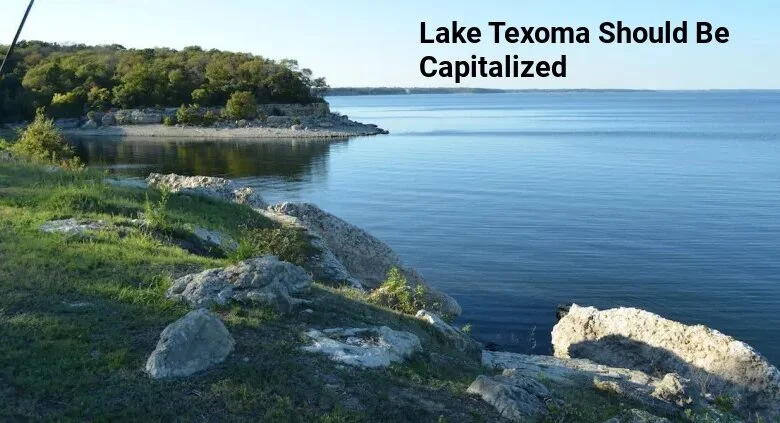
When you’re writing about places online especially popular destinations like Lake Texoma, it’s easy to get tripped up by capitalization. You might wonder, Is it “Lake Texoma,” “lake texoma,” or “Lake texoma”? If you care about good writing, SEO, credibility, or just not annoying grammar nerds, the answer matters.
Short version: Lake Texoma” should always be capitalized when you’re referring to the actual lake on the Texas–Oklahoma border. But let’s dig into why that’s the case, when you might see lowercase, and how to avoid common mistakes.
Proper Nouns 101 – Why Capitalization Matters
In English, proper nouns are the unique names of specific people, places, or things. They’re like labels on a map:
-
John (a specific person)
-
Paris (a specific city)
-
Mount Everest (a specific mountain)
Because Lake Texoma is not just any lake, but a specific, named body of water, it falls into this category. That’s why “Lake Texoma” should be capitalized in almost every normal usage.
Think of it this way: if it’s on a map as a name, you capitalize it. You’d never write “grand canyon” or “pacific ocean” in a formal article. Same rule applies here: “lake texoma” is wrong; “Lake Texoma” is correct.
Breaking Down the Name Lake Texoma
Let’s look at the pieces of the name:
-
“Lake” – This is a generic word, like “river” or “mountain.”
-
“Texoma” – This part makes it unique. It’s formed from “Texas” + “Oklahoma”, reflecting the states it borders.
When a generic word like lake becomes part of the official name of a place, it gets capitalized too. That’s why we write:
-
Lake Texoma
-
Lake Michigan
-
Lake Tahoe
So in this context, both words are part of the proper noun, and both should start with capital letters. If you’re answering a grammar question or writing an article, saying “Lake Texoma should be capitalized” is absolutely correct and easy to justify with standard English rules.
What Style Guides Imply About “Lake Texoma”
Most major English style guides (like APA, Chicago, and MLA) follow the same core rules for capitalization of place names:
-
Capitalize the full, official name of geographical features
-
Lowercase the generic term when used in a general or descriptive sense
Applied to this keyword:
-
Correct: We spent our vacation at Lake Texoma.
-
Correct: There are many beautiful lakes in this region, including Lake Texoma.
-
Incorrect: We spent our vacation at lake texoma.
-
Incorrect: We went fishing at Lake texoma.
If you’re writing for a blog, tourism site, or essay and someone asks whether “lake texoma should be capitalized,” the answer is a clear yes. Any editor or style guide would insist on “Lake Texoma”.
When Could “lake Texoma” Ever Be Lowercase?
Here’s where things get a bit nuanced and more human: in very casual writing, especially in texts, chats, or informal social media posts, people often ignore capitalization rules on purpose. You might see:
-
road trip to lake texoma this weekend!
-
we love camping at lake texoma every summer.
Is this grammatically correct?
No.
Is it common in relaxed internet language?
Yes.
However, if you are:
-
writing an article,
-
doing SEO blogging,
-
preparing academic content,
-
creating travel guides,
…you should never follow those casual patterns. In any serious or semi-professional context, “Lake Texoma should be capitalized” every time you use it as a name.
The only time “lake” goes lowercase is when it’s used generically:
-
This region has a lake that borders Texas and Oklahoma.
-
The lake is popular for fishing and boating.
Notice that in those sentences, you’re not using the actual name “Lake Texoma,” just describing a lake in general. That’s when lowercase is correct.
SEO, Branding, and Why Capitalization Helps You Online
If you’re writing content for a website, especially a travel, real estate, or information blog, the way you format names like Lake Texoma actually affects how people perceive your brand.
Here’s why capitalization still matters in 2025:
-
Professionalism: People unconsciously trust content more when names are written correctly. “lake texoma cabins” looks sloppy compared to “Lake Texoma cabins.”
-
Readability: Capital letters help the reader’s eye quickly pick out important information—places, people, and brands.
-
Consistency: Search engines also like clean, structured text. While they don’t “penalize” lowercase names directly, consistently correct capitalization supports an overall polished, trustworthy page.
So if your key phrase or topic is about whether “lake texoma should be capitalized,” and you’re building an article around it, using the correct form “Lake Texoma” throughout your content reinforces both grammar correctness and brand quality.
Common Mistakes Writers Make With “Lake Texoma”
If you write fast or copy-paste from random sources, it’s easy to introduce small errors. Here are a few to watch out for:
-
Capitalizing only one word
-
Lake texoma
-
lake Texoma
-
Lake Texoma
-
-
Using lowercase in headings or titles
-
best fishing spots at lake texoma
-
Best Fishing Spots at Lake Texoma
-
-
Overthinking sentence position
Some people think you only capitalize at the beginning of a sentence. That’s incorrect. Proper nouns get capitalized no matter where they appear:-
At Lake Texoma, sunsets are stunning.
-
We drove three hours to get to Lake Texoma.
Even in the middle, “Lake Texoma” keeps its capitals.
-
-
Mixing generic and proper incorrectly
-
The lake near Lake Texoma is also beautiful.
Here, the first “lake” is generic (lowercase), the second is part of the name (capitalized).
-
Simple Rules to Remember (So You Never Doubt Again)
If you ever find yourself thinking, “Does lake texoma need to be capitalized?” just run through this quick checklist:
-
Is it the name on a map?
If yes → capitalize both words: Lake Texoma. -
Is “Lake” acting as part of the name, not just a description?
If yes → capitalize it. -
Are you writing anything even slightly formal—blog, article, essay, social media post for a brand?
If yes → always use Lake Texoma, never “lake texoma.”
As a neat summary: “Lake Texoma should be capitalized” is not just a keyword phrase—it’s a correct grammar rule.
Related: NYT Strands Hints: The Complete Guide to Mastering the New York Times Word Puzzle
Conclusion
Language changes all the time. Slang evolves, emojis creep into sentences, and people bend rules on purpose. But some fundamentals stay solid, especially in written English that’s meant to inform, persuade, or rank well in search engines.
Lake Texoma isn’t just a lake; it’s Lake Texoma—a specific destination with its own identity, history, and importance to both Texas and Oklahoma. Recognizing that by capitalizing the name correctly is a small but powerful sign that you care about precision.
So, whenever you’re typing that phrase, remember:
- Lake Texoma” should always be capitalized.
- lake texoma” belongs only in careless typing and casual chats.
Use the correct form, and your writing will instantly look more polished, credible, and professional.