
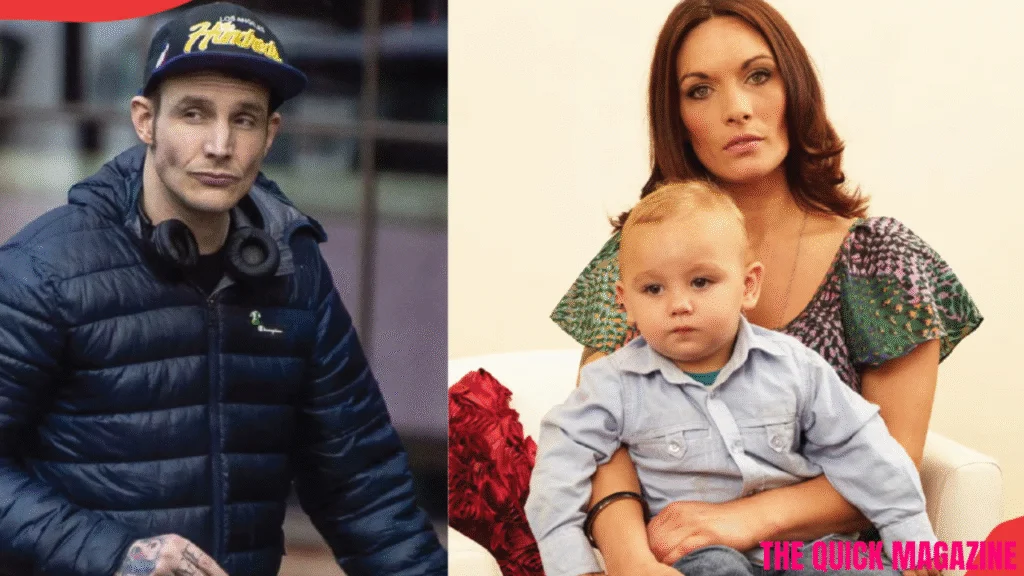
Some names surface in search results not because of public ambition, but because of family history. Lola Jade Fielder-Civil is one such name—quietly known through association rather than personal spotlight. In an era where digital curiosity often blurs the line between public interest and private life, understanding who she is requires balance, context, and restraint.
Rather than being a celebrity figure herself, she is known primarily as the daughter of Blake Fielder-Civil, a name familiar to many through his past marriage to the late singer Amy Winehouse. Yet reducing a child’s identity to inherited notoriety misses the larger picture. Her story is less about fame and far more about growing up in the shadow of it—and, importantly, outside of it.
Family Background Without Sensationalism
Lola Jade was born into a family already shaped by intense media exposure. Her father’s earlier years were widely documented, often framed through controversy rather than growth. Later in life, he chose a quieter path, building a family away from public scrutiny.
She is one of two children born to Blake Fielder-Civil and his former partner, with her older brother arriving a few years earlier. From what is publicly known, both children have been deliberately kept out of the media. No public social media profiles, no interviews, no staged appearances—an intentional contrast to many celebrity-adjacent families.
This decision matters. It reflects a broader shift where individuals connected to fame actively protect the next generation from its pressures.
Why Public Curiosity Exists at All
Search interest around this name often stems from:
-
Ongoing fascination with Amy Winehouse’s legacy
-
Curiosity about the later life of her former husband
-
A general trend of searching for “where are they now” family connections
However, none of these reasons justify invasive assumptions. What is appropriate is understanding how children connected to public figures can grow up differently depending on the choices adults make around them.
A Childhood Defined by Privacy, Not Publicity
Unlike many children of entertainers, Lola Jade’s upbringing appears grounded and deliberately ordinary. There are no public records of performances, modeling, or media exposure. Education, routine, and normalcy take precedence over recognition.
This approach reflects a growing awareness of how early fame—or even second-hand fame—can affect emotional development. Studies on children raised under public scrutiny consistently show higher risks of anxiety, identity confusion, and loss of autonomy.
From a human perspective, this protective boundary is not absence—it’s care.
I remember once seeing how relentless online speculation can become around children of famous families, and it reinforced how valuable anonymity truly is.
Media-Exposed Childhood vs Privacy-First Upbringing
To understand the significance of this choice, it helps to compare two very different paths children of public figures may experience:
| Aspect | Media-Exposed Upbringing | Privacy-Focused Upbringing |
|---|---|---|
| Public visibility | High from early age | Minimal to none |
| Online footprint | Permanent, searchable | Largely nonexistent |
| External pressure | Strong expectations | Reduced expectations |
| Identity development | Often influenced by fame | More self-directed |
| Long-term autonomy | Frequently challenged | Better preserved |
The second path, which appears to apply here, prioritizes emotional safety over public curiosity.
The Real-World Impact of Choosing Privacy
Consider a real-life scenario: a teenager applying for university or a first job. A quick online search reveals nothing beyond a name—no headlines, no commentary, no assumptions. That absence becomes an advantage.
For children connected to well-known figures, privacy is not secrecy; it’s future flexibility. It allows them to choose who they want to become, rather than being told who they already are.
This is the quiet strength behind keeping certain lives off the internet.
Public Legacy vs Personal Identity
One unavoidable reality is that family legacy exists whether acknowledged or not. But legacy does not have to define destiny. Children are not extensions of public narratives—they are individuals with their own paths.
In this case, public knowledge ends at lineage. Everything beyond that remains intentionally unwritten, which is perhaps the most respectful outcome possible.
Rather than asking “Will she be famous?”, the more meaningful question becomes “Will she be free to choose?”
Why Respectful Coverage Matters
Writing responsibly about individuals like Lola Jade Fielder-Civil sets a precedent. It reminds readers that:
-
Not all searchable names belong to public figures
-
Curiosity does not equal entitlement
-
Silence can be a sign of healthy boundaries
In a digital age driven by exposure, restraint is a form of integrity.
Related: The Story Behind Gregg Wallace Wife: Who She Is and Why Their Relationship Captures Attention
Conclusion
Lola Jade Fielder-Civil represents a growing, important shift in how families connected to fame handle visibility. Her story is not one of headlines or achievements broadcast online, but of intentional privacy, protection, and possibility. By choosing a life outside the spotlight, her family has given her something increasingly rare: the freedom to define herself on her own terms. Sometimes, the most meaningful stories are the ones still unfolding—quietly.
Frequently Asked Questions
Who is Lola Jade Fielder-Civil?
She is the daughter of Blake Fielder-Civil and is known publicly only through family association, not personal media presence.
Is she a public figure or celebrity?
No. She is a private individual and has not appeared in public media or entertainment.
Why do people search for her name online?
Mostly due to curiosity related to her father’s past public life and broader interest in celebrity family connections.
Are there photos or interviews available?
No verified public interviews or official media appearances exist, reflecting a strong emphasis on privacy.
Is it appropriate to speculate about her future?
It’s best not to. Respecting privacy allows individuals to grow without assumptions or external pressure.