
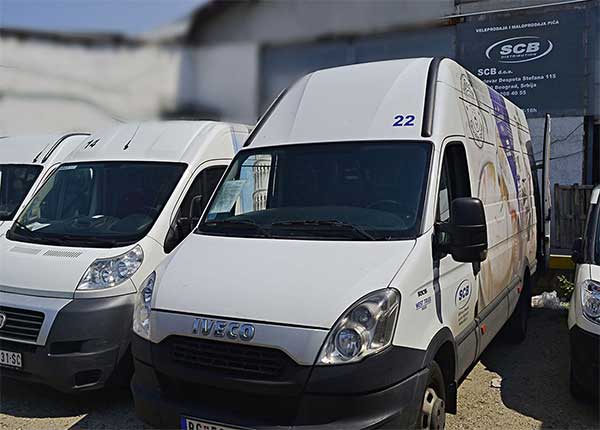
If you’ve ever searched for a company name ending with “d.o.o.” and come across SCB d.o.o., you’re not alone. The phrase appears frequently in corporate registries, invoices, contracts, and online searches—often without much explanation. To understand what it represents, you need to look beyond the letters and into how businesses are structured, registered, and trusted in parts of Europe and beyond.
Rather than being a single global brand, this term usually reflects a specific legal company entity, and understanding that distinction is essential for investors, partners, customers, and even job seekers.
Breaking Down the Meaning of “d.o.o.”
The suffix d.o.o. stands for “društvo s ograničenom odgovornošću”, which translates to limited liability company. It is commonly used in countries such as:
-
Serbia
-
Croatia
-
Slovenia
-
Bosnia and Herzegovina
-
Montenegro
Functionally, it is very similar to an LLC in the United States or a Ltd company in the UK.
When you see SCB d.o.o., it indicates:
-
The company is a separate legal entity
-
Owners have limited liability
-
The business is registered under local corporate law
This structure is widely used because it balances operational flexibility with legal protection.
What “SCB” Typically Represents
The “SCB” portion usually reflects the company’s brand name, initials, or registered business title. It does not automatically imply a connection to large international banks or institutions unless explicitly stated in official filings.
In practice, SCB could stand for:
-
A local services company
-
A construction, logistics, or trading firm
-
A technology or consulting business
-
A regional subsidiary of a larger group
This is why context matters. Two companies with similar names can exist in different countries, operating in entirely different industries.
Why People Search for SCB d.o.o.
Search intent around this keyword usually falls into a few categories:
-
Verifying a company before doing business
-
Checking legitimacy for payments or contracts
-
Researching ownership or legal status
-
Looking for contact details or services
-
Confirming employer background
In cross-border trade and outsourcing, due diligence often starts with understanding the legal form of a company—and d.o.o. entities are extremely common in regional commerce.
How a d.o.o. Company Typically Operates
While each country has its own regulations, most d.o.o. companies share common characteristics:
-
One or more founders
-
Registered share capital (often modest)
-
A managing director or board
-
Annual financial reporting requirements
-
Tax obligations as a corporate entity
This structure is popular with small and medium-sized enterprises because it offers credibility without the heavy compliance burden of a public company.
I once worked with a regional supplier operating as a d.o.o., and despite being relatively small, the legal structure gave enough confidence to sign long-term contracts—something a sole proprietorship might not have achieved.
Comparing d.o.o. With Other Business Structures
To better understand where SCB d.o.o. fits, here’s a practical comparison:
| Business Form | Liability | Typical Use | Public Transparency |
|---|---|---|---|
| Sole Proprietor | Unlimited | Freelancers, micro-businesses | Low |
| d.o.o. (LLC) | Limited | SMEs, startups, regional firms | Medium |
| Joint-Stock Company | Limited | Large corporations | High |
| Branch Office | Depends on parent | Foreign expansion | Medium–High |
This comparison explains why many companies choose the d.o.o. model—it provides legal protection while remaining relatively simple to manage.
A Real-World Scenario You Might Encounter
Imagine receiving an invoice from SCB d.o.o. for consulting or logistics services. Before processing payment, your finance team wants to confirm:
-
Is this a registered company?
-
Does it legally exist in the stated country?
-
Are the bank details consistent with the entity?
A quick check in the national business registry usually answers these questions. This step is routine but crucial, especially for international transactions.
Trust, Transparency, and Due Diligence
While the d.o.o. structure offers legitimacy, it does not automatically guarantee reliability. As with any business, trust depends on:
-
Track record
-
Financial health
-
Compliance history
-
Reputation among partners
Public registries often provide basic information such as registration date, directors, and status. More detailed insight may require financial statements or third-party checks.
Why Legal Structure Still Matters in 2025
In an era of digital-first businesses and remote operations, legal form still plays a critical role. A properly registered entity:
-
Enables enforceable contracts
-
Reduces counterparty risk
-
Improves credibility with banks and clients
-
Supports regulatory compliance
For businesses operating across borders, recognizing what structures like d.o.o. mean can prevent misunderstandings and costly mistakes.
Common Misconceptions
One frequent misunderstanding is assuming that any company with “SCB” in its name is linked to a major global bank. In reality, acronyms are reused widely, and legal independence is the norm unless explicitly disclosed.
Another misconception is that d.o.o. companies are informal or small-scale. Many are well-established, profitable enterprises operating internationally.
Related: TechUK: The Growing Digital Pulse Transforming Innovation, Industry, and the Future Workforce
Conclusion
SCB d.o.o. is best understood not as a single brand, but as a legally registered limited liability company operating under regional corporate law. The designation signals structure, accountability, and a recognized business form—but it still requires context and verification.
Whether you’re evaluating a potential partner, processing payments, or researching a company, understanding what d.o.o. represents helps you make informed, confident decisions. In business, clarity is often the first step toward trust.
Frequently Asked Questions
What does d.o.o. mean in a company name?
It indicates a limited liability company under certain European legal systems.
Is SCB d.o.o. a bank?
Not necessarily. The name alone does not confirm any banking affiliation.
How can I verify a d.o.o. company?
By checking the official business registry in the country where it is registered.
Is a d.o.o. company safe to do business with?
Legal structure helps, but due diligence is still essential.
Can a d.o.o. operate internationally?
Yes. Many d.o.o. companies engage in cross-border trade and services.