
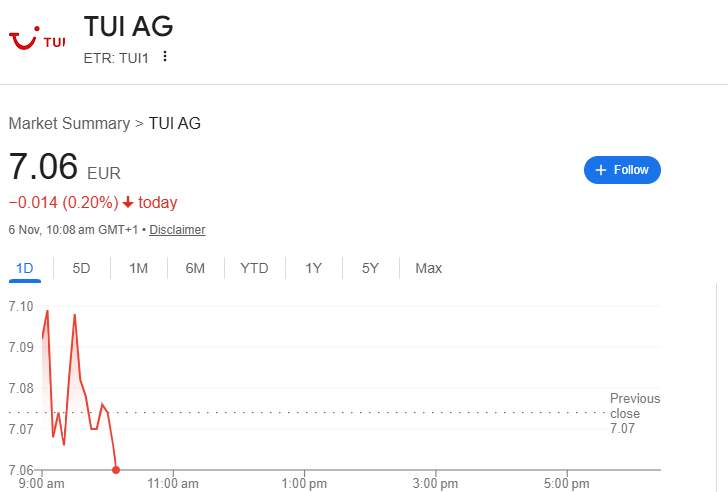
If you’ve ever priced out a summer package to the Canaries, there’s a good chance you’ve crossed paths with TUI, the European travel giant behind tour packages, hotels, cruises, and multiple airlines. Naturally, when people search for “TUI share price,” they’re after more than just a number on a screen. They want to know why it moves, where it trades now, how recent company news feeds into the chart, and what to watch next. This guide breaks all of that down in clear, practical terms.
The Basics: What TUI Is and Why That Matters for the Share Price
TUI Group is Europe’s largest tour operator with a vertically integrated model: it sells holidays and controls much of the supply airlines, hotels, cruises, tours. That setup means the share price reacts to both demand for holidays and to the cost and availability of the assets that deliver those holidays (planes, fuel, crews, hotel inventory, cruise capacity).
The company regularly publishes quarterly and annual updates that lay out bookings, load factors, segment profits, and guidance core inputs for the market’s pricing of the stock. You can find the latest official results and investor presentations on TUI’s site, which is the best primary source for fundamentals and strategy updates.
Where Does TUI Trade Now? (Tickers, Venues, and the Move to Frankfurt)
Historically, many UK investors watched TUI on the London Stock Exchange (ticker: TUI). In early 2024, shareholders voted overwhelmingly to abandon the London listing and focus trading in Frankfurt, with the plan to join Germany’s Prime Standard and—importantly—pursue index inclusion (MDAX). The delisting from London was expected in June 2024, a step designed to concentrate liquidity and align the listing with the company’s German base. Today, most real-time tracking happens on German venues (commonly shown as TUI1.DE/TUI1n on data platforms).
What’s the TUI Share Price Today? How to Check
For up-to-the-minute quotes, charts, and headlines, use a reputable market-data source. Outlets such as Reuters, Yahoo Finance, Hargreaves Lansdown, and Investing.com show live or near-live pricing, intraday charts, and key stats for the Frankfurt-listed shares. If you prefer an official lens on performance drivers (not just the price), pair those feeds with TUI’s own investor relations pages.
What Actually Moves the TUI Share Price? The Big Levers
1) Bookings & seasonality. Summer is king in European leisure travel. Updates that show strong forward bookings or improved pricing tend to lift sentiment; slowdowns, especially heading into peak season, can pressure the stock, as we’ve seen when booking growth cools.
2) Segment mix & margins. TUI isn’t just about packages; it’s also hotels and cruises. When those higher-margin segments fire say, occupancy and yields rising at RIU or stronger per-diem onboard spend overall profitability (and thus valuation) improves. Recent quarters have highlighted how that diversification buffers headwinds elsewhere.
3) Fuel and FX. Jet fuel prices and EUR/GBP exchange rates flow straight into airline cost structures and customer affordability. Airlines hedge, but spikes can still dent earnings momentum.
4) Capacity discipline & product strategy. Management targets margin uplift in the airline unit by selling more seat-only inventory, broadening products, and deepening year-round engagement. Clear, credible plans to lift airline margins beyond 3% in the medium term help the market underwrite better earnings power.
5) Capital structure moves. Rights issues, debt repayment, and state-aid exits change risk profiles. In 2023, TUI raised ~€1.8 billion via a rights issue to cut state aid and shrink credit lines actions the market watches closely when valuing equity.
Recent Performance: What the Latest Numbers Signal
Results in 2025 underscored the benefit of TUI’s broader portfolio. In the quarter ended June 30, 2025, TUI beat expectations on underlying EBIT and raised full-year guidance, attributing the outperformance to hotels and cruises, along with steady revenue growth across segments.
That kind of beat-and-raise quarter typically supports the share price by improving confidence in near-term cash generation and the trajectory into the next season. Always read these prints alongside booking commentary and forward-looking guidance to understand whether strength is cyclical (one good season) or structural (durable changes to mix and margins).
The London-to-Frankfurt Shift: Why It Matters for Liquidity and Valuation
Consolidating trading in Frankfurt aimed to concentrate liquidity, reduce administrative complexity, and possibly improve index visibility. Greater liquidity can tighten spreads and improve price discovery; eventual index inclusion can also bring passive flows. For existing UK holders, the move largely changed the venue and ticker rather than the underlying business, but it’s still a notable factor for daily trading dynamics and volumes.
How to Read TUI’s Updates Like an Analyst
Here’s a quick checklist to translate headlines into share-price implications:
-
Bookings vs capacity: If bookings growth outpaces capacity additions, pricing power often improves—good for margins. If bookings lag (or discounting rises), watch for pressure.
-
Segment commentary: Look for Hotels & Resorts and Cruises KPIs (occupancy, average daily rate, per-diem, yields). These are margin engines.
-
Airline margin roadmap: Track progress toward medium-term airline EBIT margin >3% via product mix (seat-only), network optimization, and cost discipline.
-
Cash flow & leverage: Positive free cash flow in peak quarters and a declining net debt trajectory support equity valuations, especially post-rights issue.
-
Guidance changes: Upward guidance revisions tend to be share-price supportive; cautious outlooks or cost warnings can weigh.
Key Risks to Keep in Mind
No stock story is one-way traffic. TUI’s share price remains sensitive to:
-
Macroeconomic softness (household budgets, consumer confidence).
-
Input costs (fuel spikes, wage inflation).
-
Operational disruptions (ATC strikes, airframe delivery delays).
-
Geopolitics and weather (shifting destination demand).
-
Execution risk (meeting airline margin ambitions while protecting service levels).
These aren’t unique to TUI, but the company’s scale means even modest shocks can echo through multiple segments and seasons.
Related: Unlock the Magic: Creative Elf on the Shelf Ideas That Spark Joy
Conclusion
When you check TUI’s share price, pair the chart with the narrative: booking trends into the next season, segment mix (hotels & cruises vs. airline), progress on airline margin targets, and capital structure discipline after the 2023 capital increase. Also remember the listing shift to Frankfurt: most professional trackers now follow the German tickers, so that’s where liquidity sits and where news is typically priced first.
For a rounded view, triangulate an official source (TUI investor relations) with one or two live quote platforms, and then read each quarterly update in context what changed versus last quarter and what management says about the next one.
Quick sources to monitor for the TUI share price and context:
-
Official updates & presentations: TUI Financial Results + Download Centre.
-
Trading venues & data feeds: Reuters/Yahoo Finance/Hargreaves Lansdown/Investing.com for quotes and intraday charts.
-
Structural milestones: Shareholder vote and London delisting → Frankfurt focus.
-
Capital structure moves: 2023 rights issue to repay state aid and reduce credit lines.
-
Recent earnings tone: Q3 FY25 beat and raised guidance; diversification helps.
Tip: If you’re scanning headlines, look first for bookings vs capacity, segment margin commentary, and any guidance changes. Those three lines usually explain most of the share price reaction on results day.