
Vistry Group plc (LSE: VTY) sits at the crossroads of two powerful UK narratives: a stubborn housing shortage and a market learning to price operational risk. That mix has made the Vistry share price unusually sensitive to headlines about government funding for affordable homes, cost overruns, dividends, net debt, and the company’s “partnerships” model. As of today (3 November 2025), Vistry is still working through a tough 2024 hangover while leaning hard into social and affordable housing demand. Here’s the story investors are trading.
Snapshot: Where the Vistry share price has been and why it matters
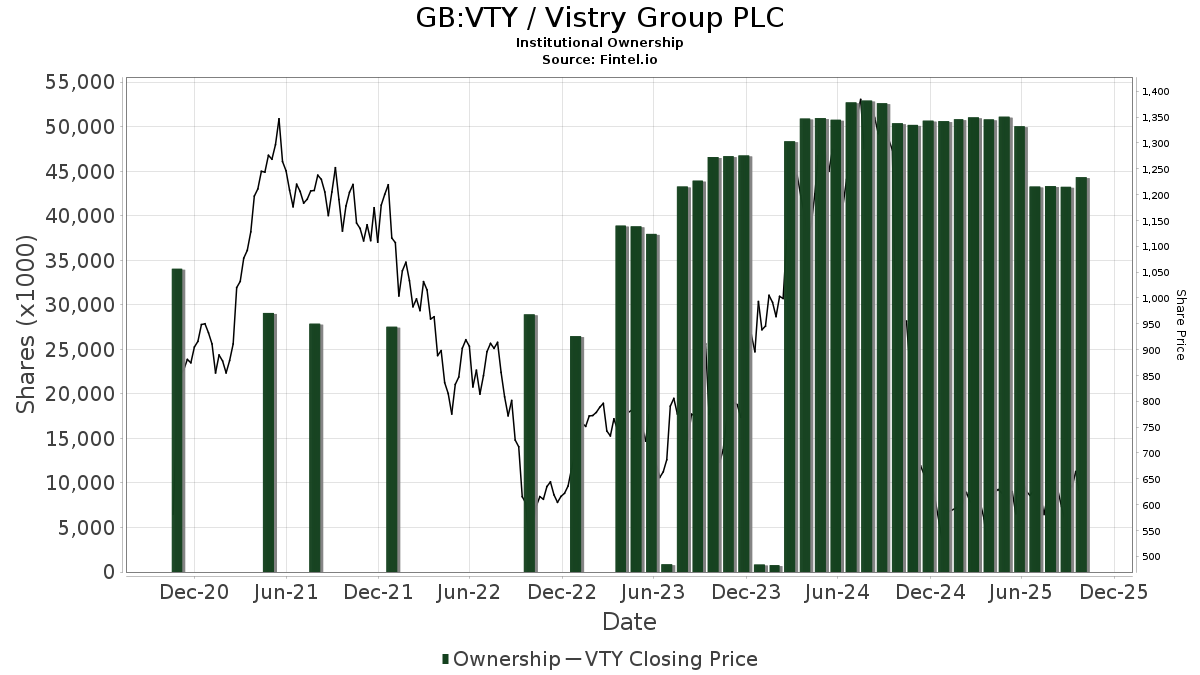
Over the last year, Vistry has swung between relief rallies and reality checks. Market data services show VTY closing in the mid-£6s recently, roughly one-third above its April 2025 low and well below its 2024 peak near £9.50. That big range maps directly to shifting expectations on profit, debt, and delivery capacity.
Two simple but telling facts shaped sentiment in 2025: first, management flagged a 35% profit slump for 2024 and dropped the final dividend while pledging cost cuts and tighter controls; second, UK policymakers re-upped support for affordable housing—a demand tailwind that fits Vistry’s strategy. The market’s tug-of-war has been between those headwinds and that policy-backed opportunity.
The business pivot: Why the “Partnerships” model is the VTY equity story
Vistry’s defining shift was its 2023 decision to refocus the group on a capital-lighter partnerships engine—building primarily for housing associations, local authorities, and build-to-rent partners—following the Countryside acquisition. Management has pitched this model as higher-through-cycle resilience with faster cash conversion compared with pure private-for-sale exposure. Company reports emphasize that integration and focus continued through 2024, even as near-term profit disappointed.
In 2025 updates, Vistry kept leaning into this identity: the group talks about contract momentum with affordable-housing partners and alignment with government housing ambitions. Analysts and trade press echo that the policy backdrop could translate into more partnered sites and steadier volumes—assuming partner capacity (funding and execution) is there.
2024 pain, 2025 repair: What the numbers and guidance signaled
The 2024 full-year print was the inflection point. Adjusted pre-tax profit fell sharply year-on-year and the final dividend was scrapped to prioritize balance-sheet strength after cost overruns and slower completions. Coverage from major outlets highlighted the hit, the cost-control reset, and the decision to streamline the regional structure. That reset framed 2025 as a “prove-it” year for operations and cash.
Through 2025, trading statements and the half-year presentation struck a pragmatic tone: profit growth still expected for FY25, but back-half weighted as funding and partner activity gather pace. External commentary pointed to falling net debt versus early-2025 levels and a refinancing runway, while also noting sector M&A and government funding as supportive context for Vistry’s affordable-homes pipeline. The market, however, has demanded delivery, not just direction.
What moves the Vistry share price day to day
Policy & funding signals. Because Vistry’s engine is linked to social and affordable housing, announcements from central bodies (e.g., Homes England pledges or Treasury allocations) ripple straight into sentiment on volumes and margins. That’s why news of multi-billion support packages has so often coincided with share-price squeezes higher.
Execution vs. overruns. The flip side is operational credibility. Reports in early 2025 on cost overruns and restructuring fueled drawdowns. Each update on site productivity, cost control, and regional simplification now acts as a credibility checkpoint that the market prices into VTY’s multiple.
Rates and mortgage flow. Even though partnerships reduce exposure to private-for-sale demand, the sector still trades with UK rate expectations and mortgage approvals. Any sign of easing rates and stabilized transactions can lift the group and peers, while rate scares can pull them down together.
Dividends and buybacks. The 2024 dividend decision stung; future capital returns depend on hitting profit and cash targets. Brokers and platforms track buyback notices and dividend intentions closely—items that can spark fast moves when confidence returns.
Valuation lens: How investors frame VTY now
Valuation has migrated from a simple “housebuilder P/E + dividend” story to a contracted-pipeline, capital-light model where investors care about: (1) secured frameworks and partner capacity, (2) site-level returns net of input inflation, (3) working-capital discipline, and (4) backlog visibility across 12–24 months. Company materials and sector notes repeatedly stress that partnerships can smooth cycles—if execution is tight and funding flows. That “if” is what keeps the multiple in check until delivery proof stacks up.
Risks to watch (and the bull case in a sentence)
Risks: (a) partner-side funding delays, (b) lingering build-cost pressure vs. fixed-price contracts, (c) any relapse into site-level overruns, (d) macro drag from rates and planning bottlenecks. Coverage earlier this year made clear that operational hygiene is the non-negotiable, hence the management reorg and tighter controls.
Bull case: a cleaner operating base, disciplined cash conversion, and a government-supported affordable-homes cycle that lets Vistry grow partnered volumes without leaning on speculative private sales. If that flywheel turns and net debt trends better equity holders tend to reward the story with a higher multiple, as recent rebounds from the 2025 lows hinted.
Related: Raising Space, Not Rent: A Practical Guide to Mezzanine Floor Installation
Conclusion
Vistry owns the right strategy for the market it’s in, built on demand that’s contracted and policy-backed, but 2024’s missteps raised the execution bar the company must clear throughout 2025–26. The share price has been range-bound because investors are waiting for sequential proof: cleaner half-on-half margins, steadier cash, and signed frameworks converting into completions at pace.
Company statements suggest these pieces are lining up into late-2025 and 2026; press coverage underscores that hitting them consistently is what can finally re-rate VTY. For now, traders are pricing both the upside of a policy-aligned model and the discipline required to make it sing.