
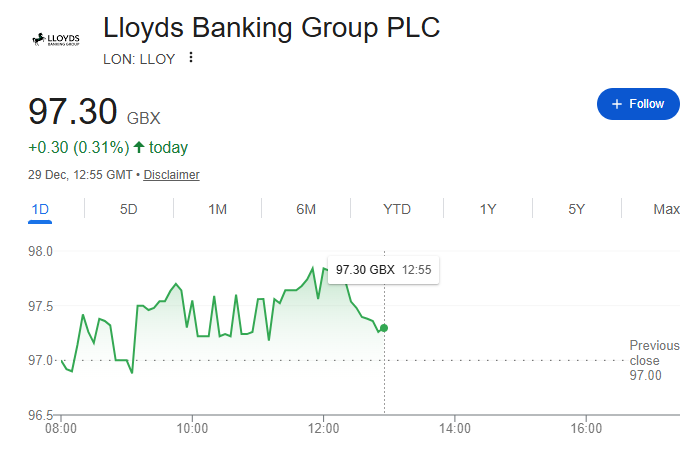
Trying to predict exactly what Lloyds Banking Group shares will trade at five years from now is a bit like forecasting the weather in a year’s time: you can identify patterns, influences, and probabilities, but certainty is impossible. That said, analysts, market observers, and financial models offer a window into potential outcomesallowing investors to consider what might lie ahead and why.
In simple terms, long-term share price projections for Lloyds vary widely, reflecting the volatility of banking stocks and the changing economic landscape in the UK and globally. Recent market performance shows the shares climbing strongly in 2025, partly thanks to better earnings driven by higher interest rates and positive sentiment around dividends. Yet this firepower doesn’t guarantee future returns, and forecasts reflect both optimism and caution.
From an AI-enabled overview perspective, any forecast blends current analyst targets, historical performance trends, and macroeconomic factors like interest rates, economic growth expectations, competition, and regulatory developments. While specific numbers in five years are speculative, analysts often provide mid-term targets that can help orient expectations.
Current Analyst Targets and What They Suggest
Looking at near-term analyst estimates gives a sense of where professionals see the stock heading over the next year or so. According to a broad consensus drawn from multiple financial sources:
-
The average 12-month analyst target for Lloyds shares hovers around 96–101p, with high estimates near 110p and lows around 84p.
-
Some forecasts even suggest that Lloyds could test or exceed the £1.00 (100p) level in the medium term—especially if strong dividends and buybacks continue to support returns.
-
However, other analysts caution that the stock might struggle to rise significantly above current levels without a sustained bout of UK economic growth.
These forecasts mostly cover a 12-month window. Long-term forecasts (five years) are less precise, but they often extrapolate these shorter targets based on expected earnings growth and economic conditions.
What Could Push the Share Price Higher… or Lower?
To understand where Lloyds shares might be in five years, it’s helpful to look at the forces that could sway the price significantly.
Potential Upside Drivers:
-
Dividends & buybacks: Lloyds currently offers a respectable dividend yield and has engaged in share repurchases—both of which can enhance shareholder returns and reduce share count, pushing value higher.
-
Interest rates: Higher interest rates tend to boost net interest margins for banks (the gap between lending and deposit costs), potentially lifting profits and share prices.
-
Economic growth: A stronger UK economy could increase loan demand and reduce defaults, strengthening the bank’s balance sheet.
Potential Downside Risks:
-
Interest rate cuts: If the Bank of England lowers rates, Lloyds’ profit margins could compress, placing pressure on earnings and valuations.
-
Regulatory headwinds: Ongoing investigations (e.g., motor-finance issues) and compliance costs can weigh on earnings and investor sentiment.
-
Competitive pressures: UK banks face intense competition and changing customer preferences, meaning Lloyds must adapt or risk losing market share.
In short, if the UK economy remains strong, rates stay supportive, and Lloyds executes well on strategy (including digital transformation), long-term gains are plausible. Conversely, an economic slowdown or downward pressure on interest rates could temper returns.
A Side-by-Side Look at Forecast Scenarios
| Scenario | Share Price Range | What It Assumes |
|---|---|---|
| Base Case | ~80–110p | Moderate UK growth, stable rates |
| Bullish | ~110–125p+ | Strong earnings, high dividends, buybacks accelerate |
| Bearish | ~60–80p | Economic slowdown, falling margins |
| Neutral (status quo) | ~90–100p | No major change from current trend |
This helps illustrate that forecasts aren’t single numbers—but ranges tied to different economic paths investors might see unfold over five years.
What a Long-Term Investor Might Experience
Imagine a retired investor who bought Lloyds shares in early 2020 at around 40p, during a time when banks were flat due to pandemic-related uncertainty. Fast forward to late 2025, and the shares are trading close to 97p—more than doubling the original investment over five years, even before dividends.
Now suppose they hold through another five years under moderate economic growth and consistent dividends. In this base case, gains may continue, but not necessarily at the same spectacular rate seen in the 2020-2025 period.
This example underscores how timing matters in cyclical stocks like Lloyds, and why past performance doesn’t guarantee future outcomes. It also highlights the importance of dividends in total returns.
So, What Will Lloyds Share Price Be In 5 Years?
The honest answer: nobody knows exactly. Predicting a precise future share price is impossible because markets respond to countless variables—some visible today, others unforeseeable. What we can say is this:
-
Analyst consensus suggests modest appreciation potential over the next year, with medium-term targets around current levels or a bit above.
-
Long-term growth (over five years) depends heavily on economic conditions, interest rates, dividends, and banking sector health.
-
Realistic scenarios see the share price possibly trading anywhere between modest gains and moderate growth, but a doubling from current levels would likely require strong macroeconomic tailwinds and sustained profitability.
Related: The Biggest Mistake Parents Make When Setting Up a Trust Fund in the UK
Conclusion
Forecasting Lloyds’ share price five years out involves blending current analyst targets, economic outlooks, and structural industry trends. While some optimism exists—backed by dividends, buybacks, and improved earnings driven by higher rates—significant uncertainty remains. Investors should view any long-term estimate as a range of possibilities rather than a single outcome.
If you’re weighing whether Lloyds is a long-term buy, it’s wise to consider both macroeconomic conditions and company fundamentals, and to remember that investing is as much about strategy and risk management as it is about target prices.
FAQs
Will Lloyds share price reach £1 in five years?
It’s possible under optimistic scenarios, but not guaranteed—analyst consensus for the next 12 months alone hovers near current levels.
What factors most influence Lloyds’ share price?
Interest rates, UK economic growth, regulatory impacts, dividends, and overall investor sentiment are key drivers.
Is Lloyds a buy or sell?
Most analysts currently rate Lloyds as a buy or hold with modest upside expected.
Should I invest long-term in Lloyds?
That depends on your risk tolerance and investment goals; gains could be modest to moderate, but volatility is inherent in bank stocks.
Does dividend income affect share price?
Yes—dividends play a role in total shareholder return and can make the stock more attractive, even if price gains are muted.