
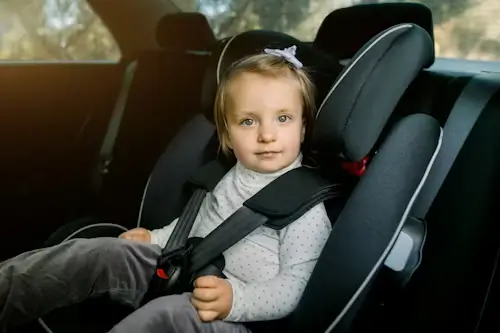
Choosing where your child should sit in the car might seem simple, but in reality it’s onof the most important safety decisions you make every time you drive. In the UK, the law sets clear minimums: a child can legally sit in the front seat when they are 12 years old or taller than 135 cm. On the surface, that seems straightforward—but true safety goes well beyond checking a height or age box.
Airbags, crash forces, and seating position play huge roles in whether a front-seat ride is genuinely safe, especially for younger children and those still growing. While being allowed in the front might make a child feel grown-up, safety experts and child protection organisations consistently emphasise that the back seat is the safest place for children of all ages. Understanding both the legal requirements and the recommended safety practices helps parents make confident, informed decisions every time they travel.
UK Legal Requirements: Age, Height, and Seating Rules
To comply with UK law, you must follow these basics:
-
Under 12 years old OR under 135 cm tall:
-
The child must use the correct child car seat or booster in a rear seat.
-
If no suitable rear seat is available (e.g., in a taxi or minibus during an unexpected journey), a child under 3 may sit in the front with the proper child seat.
-
-
12 years old OR 135 cm tall (whichever comes first):
-
The child can sit in the front seat using a standard adult seat belt.
-
This is legal, but it’s not automatically the safest choice.
-
These rules aim to put a clear legal framework in place. Yet, law isn’t safety. The most protective position in a crash remains the rear of the vehicle, which reduces the risk of contact with airbags and forward impact forces.
Why the Back Seat Is Still Safest
Airbags save adult lives—but they can pose serious hazards to young passengers. Front airbags deploy with significant force and are designed for adults. For children:
-
Airbags can cause serious injury, especially for those in rear-facing seats or under 12.
-
Even with a seat belt, the forward force in a crash is more concentrated in the front seat.
-
Rear seats typically offer more space between the child and impact zones.
Because of this, safety organisations and child seat experts generally recommend keeping children in the back until at least age 12, even if they legally can sit in the front earlier.
Comparing Seat Positions and Safety Outcomes
| Seating Position | Legal (UK) | Safety Considerations |
|---|---|---|
| Rear Seat (Child Seat) | Required until 12/135cm | Safest for crashes; limits airbag risk |
| Front Seat (Child Seat) | Only if rear not available | Only with airbag off; less safe than rear |
| Front Seat with Adult Belt | From 12/135cm | Legal, but still higher risk than rear |
| Rear-Facing Seat in Front | Unless airbag deactivated | Very safe if airbag is off |
This comparison highlights how legality and safety don’t always align. The safest instructions often go beyond the legal minimums.
Airbags and Seating: What You Must Know
Airbags save lives—but for children they can be dangerous because they inflate with force designed for adult torsos and necks. If a child is placed in a rear-facing seat in the front, the airbag must be deactivated. Failure to do so can lead to life-threatening injury in a crash.
For forward-facing seats in the front:
-
The seat should be moved as far back as possible.
-
The belt must be adjusted correctly to fit the child.
-
Overall, this is less safe than sitting in the back.
If your car allows deactivation of the passenger airbag, consult the manual and secure confirmation that the system is successfully off before placing a child in that position.
Height vs Age: What Matters More?
The two measures—135 cm height and 12 years old—are both legal cut-offs. In most cases:
-
A child who is 135 cm tall at a younger age may technically sit in the front.
-
A child taller than 135 cm often fits an adult belt better and reduces risk of belt injury.
-
However, maturity and posture matter too: an older, tall child may slouch, defeating belt placement.
Safety authorities frequently recommend combining both height and age when making decisions, not just using one factor in isolation.
Children with Specific Needs or Exceptions
There are a few exceptions where front seats might be used earlier:
-
No available rear seat: If three child seats won’t fit and the only option is the front, a child can sit there with the correct seat.
-
Taxis/minibuses on short notice: Children 3+ can use the adult belt in the back if no child seat is available.
-
Medical or special needs: Some conditions may require particular seating arrangements; always consult your doctor and a child seat expert.
Every case should be assessed individually, with safety first and legality second.
Practical Steps Before Every Trip
To ensure you’re always making the safest choice:
-
Measure your child’s height and weight regularly.
-
Check your vehicle manual for seat belt instructions specific to child passengers.
-
Adjust seat position so there’s maximum distance between the child and the dashboard.
-
Deactivate the front airbag if a rear-facing seat must be used there.
-
Always use an age and height-appropriate car or booster seat until the adult belt fits properly.
These steps go beyond compliance—they’re about protection.
A Safety-First Example
Imagine a family of four preparing for a holiday trip. Their 11-year-old daughter is 136 cm tall. Legally, she’s allowed to sit in the front because of her height, even though she’s under 12. The parents consider it for extra comfort.
However, they choose instead to keep her in the rear seat. Why? Because at 11, despite her height, she still sits lower and closer to the airbag zone than an adult. By keeping her in the back with a properly adjusted booster, they align with both best safety practices and child development needs.
This kind of real-world decision—choosing the safest option, not just the legal one—is what separates good parenting decisions from risky ones.
Related: How Should You Use Anti-Lock Brakes When You Need to Stop in an Emergency?
Conclusion
Knowing when a child can sit in the front seat is useful, but knowing when they should is even more important. UK law sets the minimum: age 12 years or height 135 cm. Beyond that, safety recommendations consistently point toward keeping children in the rear seats for as long as possible, especially while airbags remain a risk.
Make your choices with both legal requirements and protective measures in mind. Buckle up properly, place children in the safest seat available, and use every tool—from car seats to belt adjusters—to keep them protected.
FAQs
1. At what age can a child legally sit in the front seat in the UK?
A child can legally sit in the front once they are 12 years old or taller than 135 cm.
2. Is it safer for a child to sit in the back?
Yes. The rear seat is statistically safer, especially for children under 12, due to reduced airbag risk.
3. Can a child sit in the front in a taxi?
Yes, if no rear seat is available and the child uses the appropriate seat or belt.
4. What if my child is tall but under 12?
Legally they can sit in front if over 135 cm, but keeping them in the back remains safer.
5. Do I need to turn off the airbag for a rear-facing seat in the front?
Absolutely. A front airbag must be deactivated for rear-facing seats to prevent injury.