
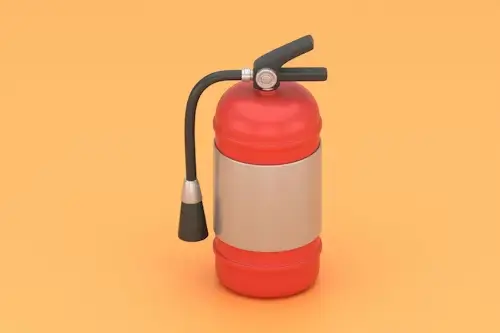
In an emergency, instinct can take over, but when fire is involved, instinct can be dangerous. One of the most critical safety questions people ask is: which extinguisher should you not use to put out a flammable liquids fire? The answer is simple, yet the consequences of getting it wrong can be severe.
Flammable liquid fires (known as Class B fires) behave very differently from ordinary fires. Using the wrong extinguisher doesn’t just fail to stop the fire it can make it spread faster.
Understanding flammable liquids fires (Class B)
Flammable liquids include substances such as:
-
Petrol and diesel
-
Oil and grease
-
Paints and solvents
-
Alcohol and fuels
These fires burn rapidly and spread easily because the liquid itself fuels the flames. Unlike solid materials, you cannot “cool” them the same way.
The extinguisher you should never use
The extinguisher you should not use on a flammable liquids fire is:
- A water extinguisher
This is one of the most important fire-safety rules.
Why water makes flammable liquid fires worse
Water and flammable liquids do not mix. When water is sprayed onto burning liquid fuel:
-
The water sinks below the liquid
-
The fuel floats on top
-
The burning liquid spreads outward
-
Flames can rapidly expand across a larger area
Instead of extinguishing the fire, water effectively pushes the burning fuel outward, increasing the danger.
I once witnessed a small garage fire escalate instantly when someone instinctively threw water on spilled petrol—the flames spread across the floor in seconds, turning a manageable fire into a serious emergency.
What extinguishers are suitable instead?
For flammable liquid fires, the correct extinguishers include:
-
Foam extinguishers – Smother the fire and prevent re-ignition
-
Dry powder extinguishers – Interrupt the chemical reaction
-
CO₂ extinguishers – Displace oxygen and suppress flames
Each works by cutting off oxygen or fuel rather than spreading it.
How different extinguishers compare
Here’s a clear comparison to remove confusion:
| Extinguisher Type | Safe for Flammable Liquids? | Why |
|---|---|---|
| Water | ❌ No | Spreads burning liquid |
| Foam | ✅ Yes | Smothers fuel surface |
| Dry Powder | ✅ Yes | Stops combustion |
| CO₂ | ✅ Yes | Removes oxygen |
This distinction is especially important in workplaces, garages, kitchens, and fuel storage areas.
Common misconceptions that cause accidents
Many people assume:
-
“Water puts out fire”
-
“Any extinguisher is better than none”
-
“Small fires aren’t dangerous”
Unfortunately, flammable liquid fires defy these assumptions. Using water can turn a small fire into a fast-moving hazard within seconds.
A real-world emergency scenario
Imagine a fuel spill in a workshop catches fire. A water extinguisher is nearby, and panic sets in. Using it seems logical—but it would cause the flames to race across the floor, blocking exits and increasing burn risk.
Using the correct extinguisher, by contrast, suppresses the fire quickly and prevents re-ignition.
Why this question matters for safety training
This topic appears frequently in:
-
Workplace safety courses
-
Fire marshal training
-
Driving and transport safety exams
-
Health and safety certifications
The reason is simple: incorrect extinguisher use is a leading cause of fire escalation injuries.
How to identify a water extinguisher quickly
Water extinguishers are usually:
-
Red with a white label
-
Marked clearly with “WATER”
-
Intended for Class A fires only (wood, paper, fabric)
Knowing this visual difference can save precious seconds.
When you should not fight the fire at all
Even with the correct extinguisher, you should not attempt to fight a fire if:
-
It is spreading rapidly
-
The room is filling with smoke
-
You don’t have a clear exit
-
You are unsure of the fuel source
In those cases, evacuate immediately and call emergency services.
Related: Inside the World of House of Coco: Creativity, Travel, and Modern Luxury Redefined
Conclusion
So, which extinguisher should you not use to put out a flammable liquids fire? The answer is clear: never use a water extinguisher. Water spreads burning liquids and dramatically increases danger. Understanding this difference can prevent injuries, property damage, and potentially save lives. Fire safety isn’t just about having equipment—it’s about knowing how to use the right one when it matters most.
FAQs
Why is water unsafe for flammable liquid fires?
Because it spreads the burning liquid rather than extinguishing it.
Can I use water if the fire is very small?
No. Even small flammable liquid fires can spread instantly.
Which extinguisher is best overall for liquid fires?
Foam is often preferred, but dry powder and CO₂ are also effective.
Is this tested in safety exams?
Yes. It’s a common and important safety knowledge question.
What class of fire are flammable liquids?
They are classified as Class B fires.