
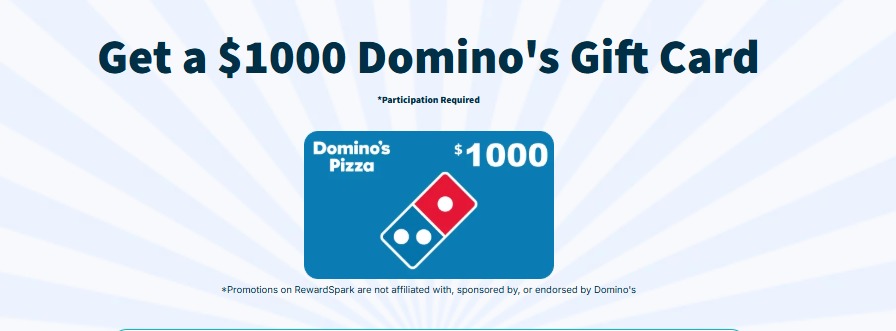
The promise of a $1000 gift card for Domino’s Pizza has become one of the most eye-catching offers circulating online. It pops up in ads, social media feeds, and promotional pages with bold claims and limited-time urgency. For anyone who loves pizza—or simply enjoys a good deal—it’s hard to ignore.
But here’s the truth: not all offers are created equal. Some are legitimate promotions with clear rules, while others are cleverly designed funnels that benefit marketers more than users. Understanding the difference can save you time, protect your data, and help you make smarter choices.
Why This Offer Gets So Much Attention
A four-figure gift card instantly triggers curiosity. It feels like a rare opportunity, especially when paired with phrases like “only a few left” or “act fast.” Psychologically, these tactics are designed to create urgency and reduce hesitation.
At the same time, food brands like Domino’s are already associated with convenience and affordability. Combining that familiarity with a high-value reward creates a powerful hook. However, the bigger the reward, the more carefully you should evaluate the offer behind it.
How These Promotions Typically Work
Most “$1000 gift card” offers follow a structured process that looks simple at first but becomes more complex as you continue.
You click on an ad and land on a page displaying the reward. Then you’re asked to answer a few quick questions—often harmless surveys about preferences or habits. After that, you’re guided into a series of “required deals,” which may include signing up for services, downloading apps, or starting trial subscriptions.
At this stage, many users assume they’re close to receiving the reward. In reality, there are often hidden thresholds, such as completing multiple offers or maintaining subscriptions for a certain period. Missing even one requirement can disqualify you.
The Difference Between Official and Third-Party Offers
A critical distinction many people overlook is the source of the promotion.
Official campaigns from Domino’s are typically:
- Hosted on their website or verified platforms
- Transparent about terms and eligibility
- Focused on realistic rewards (discounts, free items, smaller gift cards)
Third-party offers, on the other hand, are usually run by marketing networks. These companies earn revenue when users complete actions like signing up for services or sharing personal information.
That doesn’t automatically make them scams—but it does mean the primary goal isn’t necessarily to give away a $1000 reward.
A Quick Comparison to Understand the Gap
To make things clearer, here’s how typical offers stack up:
| Aspect | Official Domino’s Promotions | Third-Party Gift Card Offers |
|---|---|---|
| Source | Verified brand channels | External websites/ads |
| Reward Size | Moderate and realistic | Often very high ($500–$1000) |
| Requirements | Simple (purchase or signup) | Multiple tasks or subscriptions |
| Transparency | Clear terms | Often complex or hidden |
| Success Rate | High | Uncertain |
This comparison highlights a simple truth: the easier and more transparent the process, the more likely it is to be genuine.
A Practical Example of How These Offers Work
Imagine this: you’re scrolling through your phone late at night and see an ad offering a $1000 Domino’s gift card. You click, answer a few questions, and start completing offers. One requires a free trial, another asks for app downloads, and a third needs a subscription.
After spending an hour, you realize you still haven’t “qualified.” Worse, you start receiving promotional emails and unexpected charges from trials you forgot to cancel.
This situation is surprisingly common—and it shows how quickly a “simple reward” can turn into a complicated process.
The Hidden Costs Behind “Free”
Even when no direct payment is required, there are still costs involved:
- Time investment: Completing multiple steps can take hours
- Data sharing: Your email and personal details may be distributed widely
- Subscription traps: Free trials can convert into paid plans
In many cases, users end up spending more—either financially or in effort—than the value of the reward they hoped to receive.
A More Practical Way to Look at It
Instead of focusing on the headline reward, it’s smarter to evaluate the overall exchange. Ask yourself:
- What am I giving in return?
- Is the process clear and fair?
- Is the source trustworthy?
From personal experience, I once tested a similar offer out of curiosity, and while it looked promising at first, the number of required steps quickly made it feel more like a task than a reward.
Better Alternatives That Actually Work
If your goal is to save money on pizza or enjoy perks from Domino’s, there are far more reliable options:
- Loyalty programs: Earn points for every order and redeem them easily
- Seasonal deals: Discounts and combo offers appear regularly
- Cashback platforms: Some apps provide small but consistent savings
These methods may not promise $1000, but they deliver real, predictable value without unnecessary complications.
What Makes a Truly Valuable Offer
A genuinely worthwhile promotion doesn’t rely on exaggerated claims. Instead, it offers:
- Clear instructions
- Achievable requirements
- Transparent terms
- Immediate or guaranteed benefits
This is where many high-value gift card offers fall short—they prioritize attention over usability.
Why Caution Matters More Than Ever
Online promotions have evolved. They’re more polished, more convincing, and often harder to distinguish from legitimate campaigns. That’s why a careful approach is essential.
Being skeptical doesn’t mean missing out—it means protecting your time, money, and personal information while focusing on opportunities that actually deliver.
Related: $100 Nike Gift Card Giveaway – Complete Guide to Claiming Rewards Safely
Conclusion
The idea of getting a $1000 Domino’s gift card is undeniably appealing, but the reality behind most of these offers is far less straightforward. While some may be technically legitimate, they often involve complex requirements, hidden conditions, and uncertain outcomes.
A smarter approach is to prioritize verified promotions and realistic rewards. By doing so, you avoid unnecessary risks and still enjoy genuine benefits.
In the end, the best deals are the ones that respect your time and deliver exactly what they promise—no confusion, no hidden steps, and no surprises.
FAQs
Is it really possible to get a $1000 Domino’s gift card?
It’s rare. Most high-value offers come from third-party platforms with strict or unclear requirements.
Are these promotions scams?
Not always, but many operate in a way that makes rewards difficult to obtain. Caution is strongly recommended.
Do I need to pay to receive the gift card?
Some offers include free trials or subscriptions that may turn into paid charges if not canceled.
How can I verify a legitimate offer?
Check if it’s hosted on official Domino’s channels or clearly endorsed by the brand.
What’s the safest way to get Domino’s rewards?
Use the official loyalty program and verified promotions for consistent and reliable benefits.